
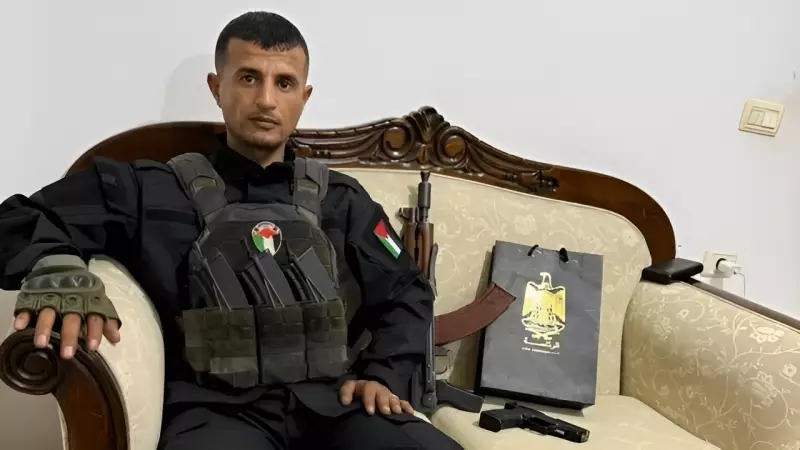
The leader of a prominent Palestinian militia armed and financed by Israel has been killed in Gaza, dealing a significant blow to Israeli plans for governing the territory after the war.
Death of a Key Figure
Yasser Abu Shabab, who was in his early 30s and commanded the "Popular Forces" militia in the southern city of Rafah, died on Monday, May 12, 2025. His group confirmed the death, stating he was killed while trying to resolve a dispute between members of a local family. An Israeli source, however, suggested earlier that the death resulted from "internal clashes."
Israeli officials revealed that attempts were made to evacuate Abu Shabab to southern Israel for emergency medical treatment before he was pronounced dead. His militia was the most notable among several loosely organized Palestinian armed groups that Israel has supported inside Gaza to counter Hamas.
A Setback for Israel's Gaza Strategy
Analysts see Abu Shabab's death as a major complication for Israel's developing post-war strategy. With no finalized governance plan for Gaza, Israel has relied on these militias to establish small zones of control outside Hamas's influence. Prime Minister Benjamin Netanyahu has publicly described such groups as "a good thing," despite criticism that empowering them is risky and destabilizing.
Abu Shabab had been gradually expanding his influence, trying to carve out pockets of territory free from Hamas control. Israel viewed his Popular Forces as a crucial tool to weaken Hamas and as a potential alternative to Islamist rule in Gaza. The group was also expected to play a future role in managing security around reconstruction projects in Israeli-occupied parts of Gaza, as outlined in ceasefire plans. Recently, they helped regulate the flow of humanitarian aid from the Kerem Shalom crossing.
Reactions and Denials
Hamas, which had long labeled Abu Shabab a collaborator and traitor, celebrated his death. In a statement, the group said he met "the inevitable fate of anyone who betrays their people," adding that Israel could not protect its partners. However, Hamas did not directly claim responsibility for the killing.
In response, the Popular Forces rejected any suggestion that Hamas was behind the assassination. They stated the militant group was "too weak" to carry out such an act and accused unnamed parties of spreading false information.
The incident has exposed the volatile and complex dynamics on the ground. Images circulated on Gaza social media showed some Palestinians celebrating Abu Shabab's death, with one photo marking his face with a red "X."
Regional analysts note that these Israeli-backed groups typically operate within Israeli-controlled areas, conducting raids into Hamas territory before retreating to Israeli protection. The operation to arm factions like the Popular Forces was approved without formal authorization from Israel's security cabinet, according to Israeli officials.
The killing of Yasser Abu Shabab throws into sharp relief the challenges Israel faces in attempting to reshape Gaza's political landscape through local proxies, highlighting the deep internal divisions and persistent violence that continue to plague the territory.




