
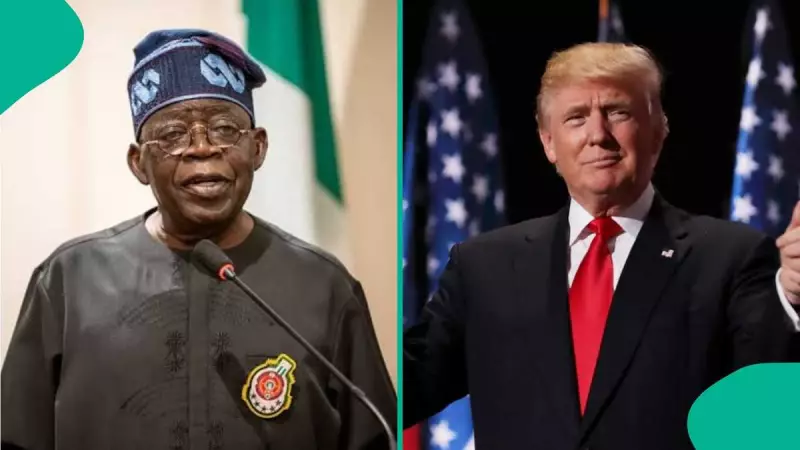
Nigeria's Minister of Aviation and Aerospace Development, Festus Keyamo, has ignited a fresh public conversation with a veiled statement made amid ongoing joint military operations between Nigeria and the United States. The minister's cryptic comment, posted on social media on Saturday, December 27, 2025, used the analogy of a burning house to seemingly address the controversial foreign assistance in combating terrorism.
The Minister's Cryptic Analogy on Foreign Aid
In a post that has since gone viral, Festus Keyamo, a key figure in President Bola Tinubu's administration, wrote a parable about a dire emergency. "When your house is on fire, it would be stupid to prevent anyone who has fire extinguishers from coming into your house and putting out the fire," Keyamo stated. He emphasized that logic demands accepting urgent help, adding, "It defies logic to begin to consider the privacy of your home at that moment when the raging fire is about to consume your family."
This statement is widely interpreted as a direct reference to the recent US airstrike against an Islamic State of Iraq and Syria (ISIS) cell in Tangaza Local Government Area of Sokoto State. The operation, a product of military cooperation between the two nations, has been a subject of intense national discourse, with Keyamo's post offering a ministerial perspective framed in metaphorical terms.
Nigerians React: A Nation Divided on Interpretation
The minister's post immediately triggered a flood of reactions from Nigerians, revealing deep-seated divisions on the issue of foreign military intervention. Citizens took to the comment section to dissect Keyamo's analogy, offering counter-narratives and probing questions.
One user, Uncle Dip, challenged the premise, suggesting that a helper with the biggest extinguisher might exploit the situation. "It would be more prudent for you to reject his help and let as many of those with smaller extinguishers come in... you’ll have preserved your pride and dignity," he argued.
Another commenter, Abdulmajid Tahir, shifted focus to prevention and preparedness. "What’s more stupid is having the money to build a house but no fire extinguisher," he wrote, implying criticism of the government's prior investment in security infrastructure.
Further skepticism was voiced by Akan Ime, who questioned the root causes: "Who supplied the matches and the fuel? And why were the fire alarms disconnected in the first place? Focusing only on the responders is a convenient way to avoid the arsonists in the room." This sentiment reflects concerns about underlying governance and security failures that necessitate external help.
Broader Political Context and Calls for Expansion
Keyamo's comment arrives amidst broader political calls for an expansion of the Nigeria-US security partnership. Senator Ali Ndume, representing Borno South, has publicly urged the federal government to extend similar joint military operations to the northeast region of Nigeria.
Ndume, a high-ranking lawmaker, believes such a move would significantly weaken the hold of Boko Haram and the Islamic State's West Africa Province (ISWAP) terrorist groups. His advocacy highlights the persistent security challenges in the northeast and the growing political appetite for leveraging international alliances to achieve domestic security objectives.
The debate encapsulated by Keyamo's post touches on core issues of national sovereignty, the effectiveness of local security agencies, and the terms of engagement with global powers. While the minister's analogy advocates for pragmatic acceptance of aid in a crisis, the public's reaction underscores a complex landscape of pride, suspicion, and a demand for greater accountability from national leadership.




