
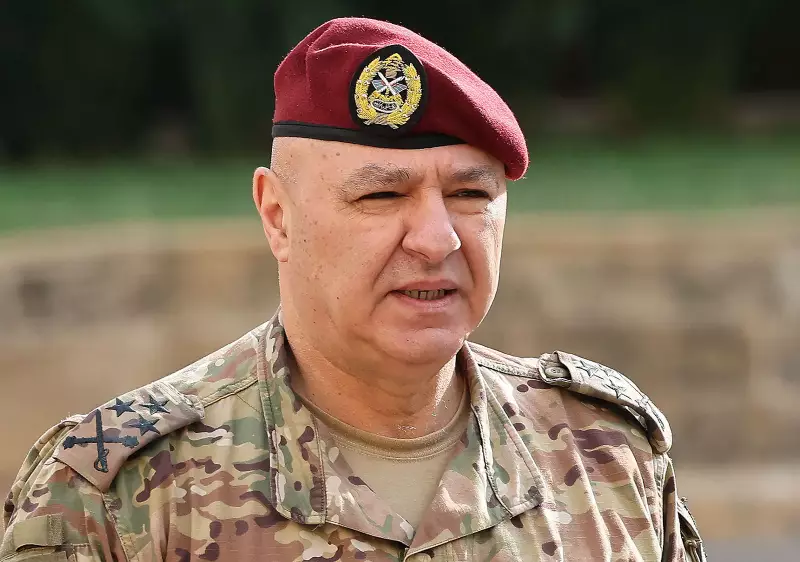
Lebanese President Joseph Aoun has made a clear appeal for peace, directly informing a visiting United Nations Security Council delegation that his country does not desire a military confrontation with Israel. This statement comes just days after civilian representatives from both nations engaged in their first direct discussions in many years.
A Plea for Peace and Army Support
During the meeting held on Friday, President Aoun stressed that the people of Lebanon have endured enough suffering from past conflicts. "The Lebanese do not want war again, the Lebanese people have suffered enough and there will be no going back," he stated, according to an official release from the presidency.
Aoun called on the international envoys to back the Lebanese army's efforts to disarm all non-state armed groups. He revealed that the army aims to finish the initial stage of this government-approved plan before the year ends. "The Lebanese army will play its full role… The international community must support and assist it," the President asserted, adding that the decision is irreversible, even if implementation takes time, due to public exhaustion with military clashes.
Diplomatic Moves and Internal Criticism
The push for diplomacy includes a significant step: the inclusion of civilian representatives in the meetings of the committee monitoring the ceasefire. President Aoun views this as a crucial measure to prevent another war. However, this move has drawn sharp criticism from within Lebanon.
Hezbollah's Deputy Secretary-General, Naim Qassem, stated in a televised speech that while his group supports the state's choice of diplomacy to end Israeli aggression, he strongly condemned the inclusion of a civilian representative in talks with Israel. "We consider this measure an additional misstep on top of the sin" of the government's earlier decision to task the army with disarming Hezbollah, Qassem said. He urged authorities to reconsider, arguing that such concessions would not alter Israel's hostile stance or occupation.
Ongoing Tensions and UN Scrutiny
Despite a ceasefire agreement from November 2024 meant to halt over a year of hostilities between Israel and Iran-backed Hezbollah, violence has persisted. Israel has continued its strikes on Lebanese territory and maintains a troop presence in five areas of southern Lebanon it considers strategically important.
President Aoun emphasized to the UN delegation "the need to pressure the Israeli side to implement the ceasefire and withdraw." He noted that the success of any talks depends primarily on Israel's position. The monitoring committee, with civilian representatives participating, is scheduled to reconvene for a new round of discussions starting December 19.
The UN delegation, which visited Damascus before meeting Lebanese officials, is set to inspect the southern border area. After their meeting, Parliament Speaker Nabih Berri, a Hezbollah ally, declared that "negotiating under fire is unacceptable." He stressed that real stability requires Israel to fully adhere to UN Resolution 1701 and the ceasefire terms, halting daily violations and withdrawing behind the international border.
The situation remains tense on the ground. On Thursday, just a day before the UN meeting, Israel conducted strikes on four towns in southern Lebanon, claiming it targeted Hezbollah weapons depots. UN peacekeepers labeled these strikes as "clear violations of Security Council resolution 1701." In a separate incident, UN vehicles were fired upon near Bint Jbeil, though no injuries were reported.
While Hezbollah has largely refrained from responding to recent Israeli attacks, the group has vowed retaliation for the killing of its military chief in a strike on Beirut's southern suburbs last month, keeping the region on a precarious edge.




