
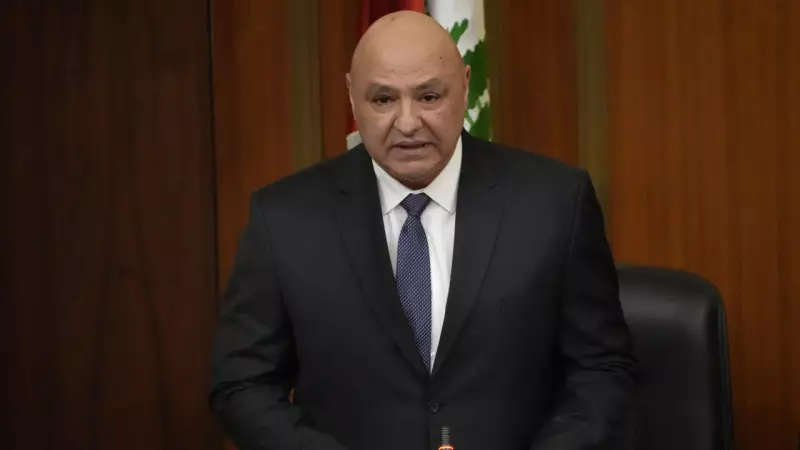
Lebanese President Joseph Aoun has delivered a clear message to the international community: Lebanon does not desire a military confrontation with Israel. He made this declaration during a meeting with a United Nations Security Council delegation, following rare civilian-led talks between the two nations.
A Plea for Peace and Support
President Aoun stressed that the people of Lebanon "do not want war again" and have endured enough suffering. He called on the United Nations to back the Lebanese army's strategic plan to disarm non-state armed groups operating within the country. The army anticipates completing the initial phase of this critical plan before the end of the year.
"The Lebanese army will play its full role… the international community must support and assist it," Aoun stated firmly. He emphasized there would be "no going back" on this decision, acknowledging that the process might be lengthy but is essential for a nation weary of conflict.
Diplomatic Moves and Internal Criticism
The diplomatic landscape saw a significant development as civilian representatives from both Lebanon and Israel joined a committee tasked with monitoring the fragile ceasefire. President Aoun described this inclusion as vital for preventing another full-scale war.
However, this move faced criticism from within Lebanon. Hezbollah's Deputy Secretary-General, Naim Qassem, whose group has long refused to disarm, expressed support for the state's diplomatic efforts but labeled the involvement of civilian representatives a "misstep." Qassem argued that this would not change Israel's aggressive stance or position.
Ongoing Tensions and International Scrutiny
Despite the ceasefire intended to halt over a year of hostilities between Israel and the Iran-backed Hezbollah, violence has persisted. Israel has continued conducting strikes on Lebanese territory and maintains a troop presence in five strategic areas in the south.
Recent Israeli attacks targeted Hezbollah infrastructure in southern towns, including weapons storage sites. United Nations peacekeepers have condemned these actions as "clear violations" of Security Council resolutions and reported minor incidents where their vehicles were fired upon, luckily without casualties.
President Aoun urged the UN delegation to pressure Israel to fully respect the ceasefire and withdraw its forces. He noted that the success of any dialogue largely depends on Israel's cooperation. A new round of committee talks, which will include the civilian representatives, is scheduled for later this month.
The UN delegation's visit included a stop in Damascus before meeting Lebanese officials. They are also set to inspect the southern border alongside US envoy Morgan Ortagus. Following the meetings, Parliament Speaker Nabih Berri, a Hezbollah ally, called Israel's daily violations "unacceptable" and urged strict adherence to UN Resolution 1701.
Hezbollah has vowed to respond to the killing of its military chief in a recent attack on Beirut's southern suburbs, indicating that regional tensions remain dangerously high.




