
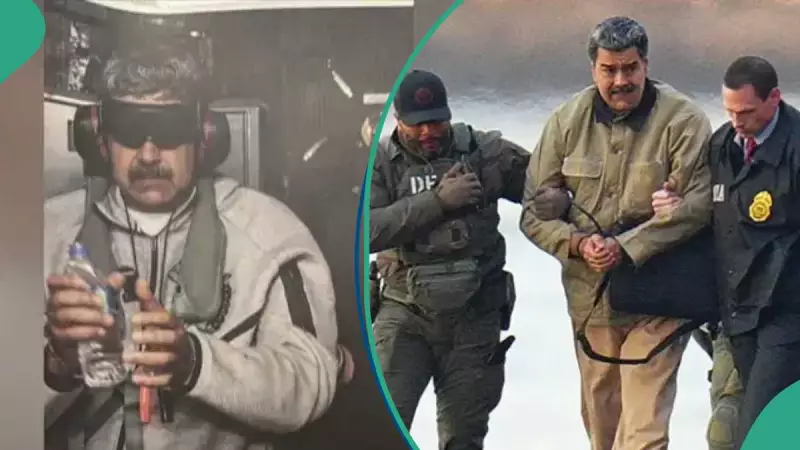
In a dramatic legal showdown that has captured global attention, Venezuelan President Nicolás Maduro made his first appearance before a United States federal court on Monday, January 6, 2026, where he forcefully denied all charges against him. The hearing, held in a packed Manhattan courtroom, marked a pivotal moment in the escalating confrontation between Washington and Caracas.
Dramatic Courtroom Scene as Maduro Pleads Innocent
The proceedings began under intense security, with Maduro appearing in handcuffs flanked by heavily armed federal agents. His wife, Cilia Flores, was by his side, showing visible injuries sustained during their arrest over the weekend. The couple was seized from their compound in Caracas and transported to the US via a special forces operation, first landing at a Manhattan helipad before being driven to court in an armoured vehicle.
During the 40-minute hearing, both defendants entered pleas of not guilty. "I’m innocent. I’m a decent man," Maduro declared to the court. Flores, with bandages on her face near the eyes and forehead, asserted her "complete innocence." The atmosphere turned tense when a member of the public shouted that Maduro would "pay" for his alleged crimes. The Venezuelan leader responded in Spanish, "I am a president and prisoner of war," before the individual was escorted out.
US Accusations and Venezuela's Oil Wealth at Stake
The Trump administration has levelled serious accusations against Maduro, linking him to overseeing vast criminal networks involved in trafficking fentanyl and cocaine. These networks have been designated as Foreign Terrorist Organisations by the US. Officials also blame his government's policies for driving hundreds of thousands of Venezuelan migrants toward the US border.
Maduro has consistently rejected these allegations, framing them as a politically motivated pretext. He argues that the true American objective is to gain control over Venezuela's vast oil reserves, the largest proven crude deposits in the world. Oil revenues traditionally fund over half of Venezuela's national budget, though exports have been crippled by US sanctions, chronic mismanagement, and lack of investment in the state-run industry.
Political Fallout and Divided Reactions
The arrest and prosecution have triggered significant political reactions on both sides. In Venezuela, Vice President Delcy Rodríguez was swiftly sworn in as interim president. She hailed Maduro and Flores as "heroes" of the nation, signalling no immediate shift in the government's stance.
In Washington, a briefing for top lawmakers by Secretary of State Marco Rubio and Defense Secretary Pete Hegseth revealed a divided American political landscape. Senate Majority Leader Chuck Schumer criticised the administration's overall plan as "vague and unsatisfying." Conversely, House Speaker Mike Johnson framed the action not as a call for outright regime change, but as a demand for fundamental governance reforms in Venezuela.
Monday's hearing sets the stage for a protracted and high-stakes legal battle. It underscores the United States' aggressive strategy to hold the Venezuelan leadership accountable, while simultaneously challenging the core legitimacy of Maduro's presidency on the world stage. The outcome will have profound implications for US-Latin American relations and the future of Venezuela itself.




