
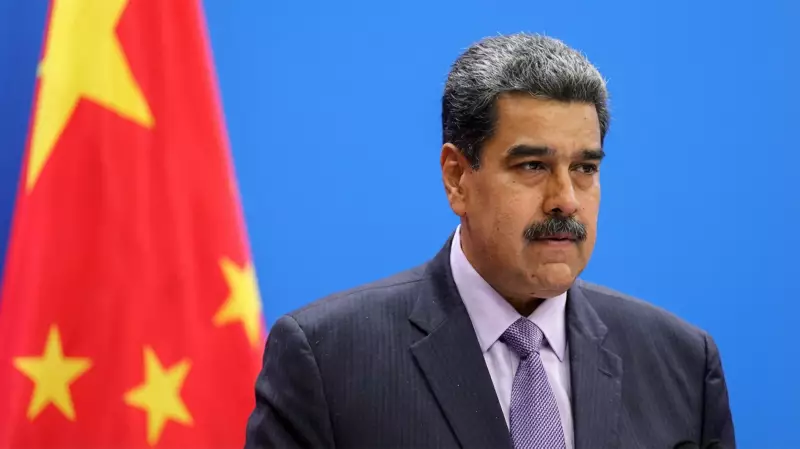
In a dramatic turn of events that has sent shockwaves across the globe, deposed Venezuelan President Nicolas Maduro is set to appear before a United States court in New York. This follows his stunning capture in Caracas over the weekend by US military forces, an operation that has abruptly altered the political landscape of the oil-rich South American nation.
The Operation and Immediate Aftermath
Nicolas Maduro, 63, along with his wife, Cilia Flores, was seized on Saturday in a high-intensity US assault. Commandos descended on helicopters, supported by fighter jets and naval power, to extract the couple from the Venezuelan capital. The operation resulted in significant casualties, with Venezuelan Defense Minister Vladimir Padrino Lopez stating that a large portion of Maduro's security detail, as well as military personnel and civilians, were killed "in cold blood." The exact death toll remains unconfirmed.
In the wake of the capture, interim leader Delcy Rodriguez, formerly Maduro's vice president, signaled a potential shift. Moving away from initial defiance, she extended an invitation to the US government to "work together on an agenda for cooperation." This development was seen as a tactical win for Washington. Meanwhile, the Maduro-loyal Venezuelan military announced its recognition of Rodriguez's interim authority and called for public calm.
US Objectives and Global Reactions
US President Donald Trump declared late Sunday that the United States was now "in charge" of Venezuela. When pressed on his demands from the interim government, Trump was unequivocal: "We need total access. We need access to the oil and other things in their country that allow us to rebuild their country." This statement underscores the strategic importance of Venezuela's vast proven oil reserves, the largest in the world.
The international response has been sharply divided. Traditional allies of Maduro, including China, Russia, and Iran, swiftly condemned the US operation. China's foreign ministry demanded Maduro's "immediate release," calling the action a "clear violation of international law." Iran affirmed its unchanged relations with Venezuela and echoed calls for Maduro's freedom. The European Union expressed alarm, while Colombian President Gustavo Petro labeled the incursion an "assault on the sovereignty" of Latin America that risked a humanitarian crisis.
The United Nations Security Council scheduled an emergency session for Monday at Venezuela's request, providing a global platform to debate the US intervention.
Political Uncertainty and Oil Market Ripples
The future of Venezuela, after a quarter-century of socialist rule under Maduro and his predecessor Hugo Chavez, is plunged into uncertainty. Notably, the White House indicated it does not seek full regime change but rather Maduro's removal and a compliant government—even if it includes his former associates. This leaves the Venezuelan opposition, which the Trump administration claims was robbed of the 2024 election, in a precarious position.
The crisis immediately impacted global oil markets, with prices dipping as investors assessed the potential for a flood of Venezuelan crude. However, analysts caution that significantly boosting the country's crippled oil production will be neither easy, quick, nor cheap. The Trump administration retains powerful economic leverage, including the ability to blockade Venezuelan oil tankers, and has threatened further military action if necessary. A substantial US naval force, including an aircraft carrier, remains stationed off the Venezuelan coast.
As details continue to emerge, Havana reported that 32 Cubans were killed in the attack. Trump suggested that Cuba itself was now vulnerable, stating, "It looks like it's going down." Within Venezuela, about 2,000 Maduro supporters, some armed, rallied in Caracas, while leading opposition figure Edmundo Gonzalez Urrutia argued that the US intervention was "not enough" without the release of political prisoners and recognition of his electoral victory.




