
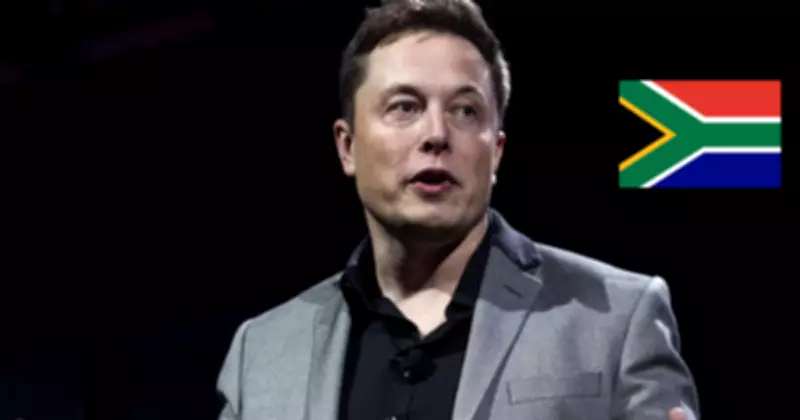
Elon Musk Accuses South African Government of Racial Discrimination Over Starlink License Blockage
Elon Musk has publicly accused the South African government of racial discrimination after his satellite internet service, Starlink, was denied an operating license in the country. The billionaire entrepreneur took to social media on April 12, 2026, to voice his frustrations, specifically targeting South Africa's Broad-Based Black Economic Empowerment (B-BBEE) laws as the primary reason for the rejection.
Musk's Allegations and Social Media Outburst
In a series of posts on his X platform, Musk claimed that Starlink was being blocked "simply because I am not Black." He emphasized that he was born in South Africa, adding emotional weight to his argument. Musk further alleged that his company had been approached multiple times with offers to circumvent the B-BBEE requirements by falsely presenting a Black South African as the local operator, proposals he said he refused on principle.
"Racism should not be rewarded no matter to which race it is applied. Shame on the racist politicians in South Africa," Musk wrote, escalating the controversy into a broader debate about race, policy, and economic fairness.
Understanding South Africa's B-BBEE Framework
The legislation at the center of this dispute is the Broad-Based Black Economic Empowerment Act of 2003. This policy was established to address the profound economic inequalities inherited from the apartheid era, aiming to increase Black South African participation in the nation's economy. Companies operating in South Africa are evaluated through a comprehensive scorecard that assesses:
- Ownership structures
- Management control and representation
- Skills development initiatives
- Enterprise and supplier development
- Socio-economic development contributions
Starlink, according to most interpretations, fails to meet the ownership and management criteria that require meaningful Black South African equity and leadership representation.
Global Context and Policy Precedents
South Africa's approach is not without international parallels. Several countries have implemented similar policies to correct historical economic exclusions:
- Malaysia introduced its New Economic Policy following 1969 race riots, targeting 30% equity for the indigenous Bumiputera population.
- United States maintains affirmative action programs in federal contracting.
- Canada mandates employers to actively eliminate barriers for women, Indigenous peoples, and people with disabilities in key sectors including communications.
This global context highlights that Musk's characterization of the situation as simple racism lands awkwardly within broader discussions about restorative economic justice.
Divided Public Reaction and Critical Perspectives
The online response to Musk's accusations has been predictably polarized. Some supporters have echoed his framing, suggesting that racial discrimination against any group should be condemned equally. However, numerous critics have questioned Musk's stance, pointing out that many white-owned businesses operate successfully in South Africa by complying with B-BBEE requirements.
Detractors have raised questions about whether Musk's outrage stems more from the law's inconvenience to his business ambitions than from any principled opposition to discrimination. They note that Starlink's failure to meet established criteria doesn't necessarily indicate systemic racism but rather reflects specific policy requirements designed to address historical imbalances.
The Broader Implications and Continuing Debate
This controversy extends beyond a single business license rejection. It touches on fundamental questions about how nations address historical economic injustices, the balance between market access and social equity, and the role of billionaires in policy debates. The B-BBEE framework exists for reasons that predate Musk's involvement and will likely continue beyond this particular dispute.
As the debate unfolds, it highlights the tension between global business interests and national policies aimed at economic transformation. The situation remains unresolved, with Musk's accusations bringing unprecedented international attention to South Africa's empowerment policies and their implementation in the technology sector.




