
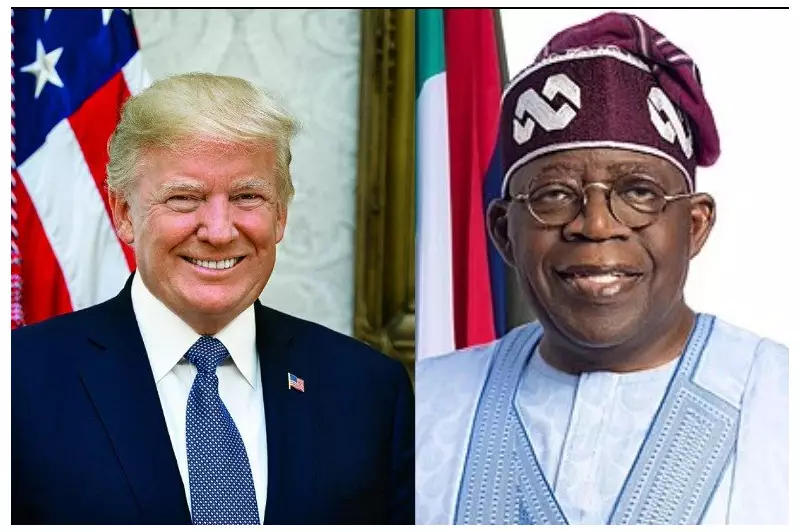
Muslim Association Issues Strong Warning on US Designation
The Muslim Association of Nigeria (MAN) has strongly cautioned Nigerian citizens and leaders against hasty reactions to former United States President Donald Trump's recent classification of Nigeria as a 'country of particular concern'. The group warned that such foreign designations could carry substantial political and security consequences for the nation.
This warning emerges during a period of intensified global examination of Nigeria's human rights and religious freedom records. Security analysts observing the situation note that foreign classifications of this nature frequently reflect broader geopolitical strategies and might be utilized to legitimize diplomatic pressure or other forms of international intervention.
Call for National Unity and Sovereignty
In an official statement released on Monday and jointly signed by MAN President, Prof. Dhikrullah Adewale Yagboyaju, and the Publicity Secretary, Hon. Mudirakat Ajibona, the Association passionately appealed to Nigerians to respond with strategic tact, national restraint, and profound unity.
The organization emphasized that Nigeria's richly diverse and multi-religious social fabric naturally generates complex social dynamics. It expressed concern that these internal complexities are often misunderstood or deliberately manipulated by foreign entities pursuing their own vested interests.
"Like in all plural societies, there are bound to be issues and problems. The case of Nigeria is complicated by foreign interests who possibly have their eyes on the country’s vast mineral, material, and human resources," the official statement declared.
MAN described any suggestion of military intervention or coercive measures by external powers as "unfortunate", stating clearly that such actions would represent "an affront to Nigeria’s sovereignty" and could potentially destabilize the entire West African region.
Presidential Engagements and Muslim Community Concerns
Meanwhile, significant developments have emerged regarding high-level discussions between Nigeria's leadership and religious authorities. The Nigerian Supreme Council for Islamic Affairs (NSCIA) has disclosed crucial details about the recent private meeting between President Bola Tinubu and the Sultan of Sokoto, Alhaji Muhammad Sa’ad Abubakar III.
This important meeting took place on Friday at the Presidential Villa in Abuja, occurring shortly after President Tinubu also consulted with the Archbishop of Abuja, Bishop Ignatius Ayau Kaigama, demonstrating a balanced approach to religious dialogue.
According to Dada Olusegun, the Special Assistant to the President on Social Media, these consultations form part of the administration's ongoing efforts to engage with religious and traditional leaders nationwide. The objective is to promote constructive dialogue and strengthen social cohesion across Nigeria's diverse communities.
The discussions gained additional urgency following recent comments by United States President Donald Trump, who threatened action against Nigeria concerning alleged attacks on Christians.
Responding to questions from journalists in Abuja on Sunday regarding Trump's remarks, NSCIA Secretary-General, Prof. Ishaq Oloyede, confirmed that the Sultan utilized the meeting with President Tinubu to directly convey the "feelings and anxieties" of Nigerian Muslims.
Oloyede clarified that concerns within the Muslim community regarding perceived marginalization were presented directly during the presidential audience. He further recalled that during the last NSCIA General Purpose Committee (GPC) meeting, one key resolution was to formally seek an audience with the President to discuss pressing issues affecting Muslims in Nigeria.
The Association concluded its public statement by calling on all Nigerians to close ranks and avoid internal divisions that could create opportunities for inappropriate foreign influence. It expressed confidence in the capability of Nigeria's leaders across political, social, and economic sectors to address internal challenges through sustained dialogue and careful diplomacy.
"We urge Nigerians to bind together as one, with implicit confidence that our leaders can resolve internal issues without external manipulation," the MAN statement reinforced.




