
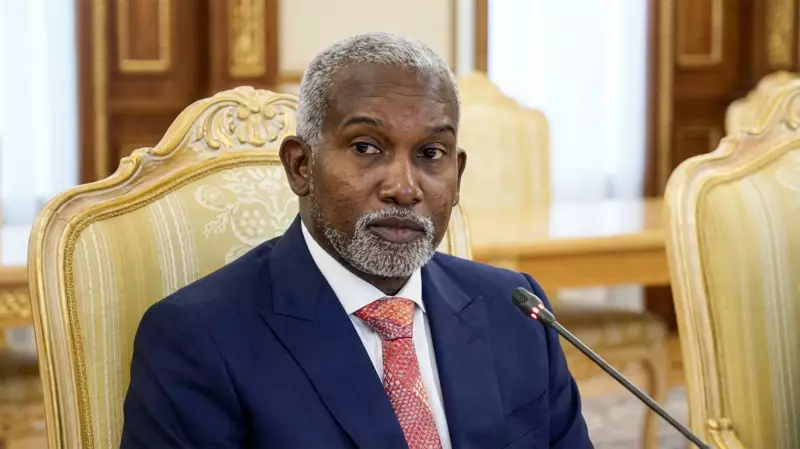
Nigeria's Minister of Foreign Affairs, Yusuf Tuggar, has provided a detailed clarification regarding the recent United States military action within the country, stating that Nigeria not only supplied the crucial intelligence but also formally gave the green light for the operation.
Nigeria in the Driver's Seat: Intelligence and Authorization
In an interview on Channels Television, Minister Tuggar emphasized that the airstrike was a product of sustained security collaboration between the two nations. He firmly stated that the action was executed with Nigeria's full consent and was devoid of any religious motivations. To underscore the point, Tuggar revealed a key detail: he was on a 19-minute phone call with U.S. Secretary of State Marco Rubio to coordinate the operation.
"It's Nigeria that provided the intelligence," Tuggar asserted. "We spoke extensively, and we agreed that I was going to speak with President Tinubu for President Tinubu to give the go-ahead." The minister added that part of their agreement included a joint communication plan to ensure the public understood the operation's true nature as a strike against terrorism and part of ongoing joint efforts.
A Consistent Strategy Against Terrorism
Tuggar positioned this event as evidence of the Tinubu administration's decisive approach to partnering with allies in the fight against insecurity. "This is what we've always been hoping for: to work with the Americans, work with other countries to combat terrorism, to stop the death of innocent Nigerians," he said. He described the strike as a vindication of the government's strategy.
The Foreign Affairs Minister reiterated Nigeria's consistent policy of collaborating with any committed partner against terrorism, irrespective of the religion of victims or the specific type of terror threat. He stressed that the sole objective of the operation was protecting lives, clarifying, "It is not to do with religion; it is to do with protecting Nigerians and the innocent lives of either Nigerians or non-Nigerians."
US Confirmation and Broader Security Context
The clarification from Abuja follows confirmation from U.S. President Donald Trump on Thursday that the strike targeted suspected terrorist elements in Nigeria. American officials corroborated that the operation was based on shared intelligence and carried out in coordination with the Nigerian government.
This development comes months after President Trump warned that Washington could act against terrorist groups operating in Nigeria, a statement that initially sparked mixed reactions locally. Nigerian officials have consistently countered any narrative framing the country's insecurity in religious terms, pointing out that both Muslims and Christians have suffered from terrorism and banditry.
Nigeria continues to grapple with severe security challenges, including the long-standing insurgency by Boko Haram and the Islamic State West Africa Province in the North-East, alongside rampant banditry and terror attacks in the North-West. While the United States has been a long-term partner through intelligence sharing and military aid, direct kinetic strikes on Nigerian soil remain uncommon and are typically met with significant public and political scrutiny.




