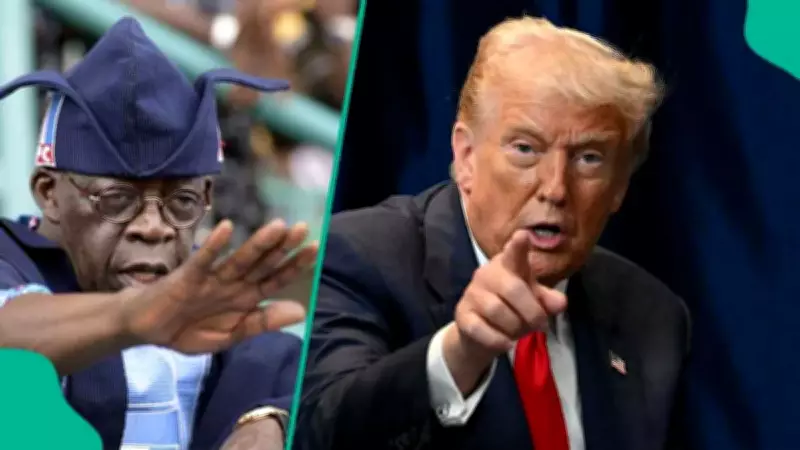
Nigeria's Government Denies Religious Persecution Claims in Response to US Congress Report
The administration of President Bola Ahmed Tinubu has issued a strong rebuttal to allegations of state-sponsored religious persecution in Nigeria, following a report submitted by United States congressmen to President Donald Trump. The Federal Government maintains that no such policy exists and that the nation's security challenges are driven by criminal elements rather than religious motivations.
Minister of Information Rejects US Congressional Stance
Mohammed Idris, Nigeria's Minister of Information, categorically denied the existence of religious persecution as a government policy during a statement released on Tuesday, February 24, 2026. The minister emphasized that Nigeria's constitution guarantees freedom of religion and worship for all citizens, and the government remains committed to upholding these fundamental rights.
Idris acknowledged that Nigeria faces significant security threats, including terrorism, banditry, and communal conflicts, which have tragically impacted numerous communities. However, he stressed that these violent incidents stem from complex security dynamics and organized criminality, not from any state-endorsed religious bias.
Constitutional Protections and Government Commitment
The minister's statement, shared via the ministry's official X handle @FMINONigeria, clarified the government's position: "It is important to state clearly that Nigeria does not have, and has never had, a state policy of religious persecution. The violence being confronted by our security agencies is not driven by government policy or religious bias, but by complex security threats, including terrorism, organised criminality, and longstanding communal tensions."
Idris further expressed deep concern over the loss of lives and destruction of property resulting from these criminal acts. He assured the public that the Tinubu administration is dedicated to ensuring equal protection under the law and safeguarding constitutional freedoms for all Nigerians, regardless of religious affiliation.
Background and Broader Context
The government's response comes amid ongoing debates about religious coexistence in Nigeria, particularly following reactions from figures like Ahmad Gumi, who defended Shariah law as a Muslim prerogative in light of the US congressional reports. Additionally, Daniel Bwala, special adviser to President Tinubu on policy communication, previously dismissed suggestions from a Nigerian-American academic to abolish Sharia, framing such external recommendations as attacks on Nigeria's sovereignty.
This development highlights the delicate balance between addressing international concerns and maintaining national sovereignty, while the government continues to navigate multifaceted security challenges that affect communities across the country.