
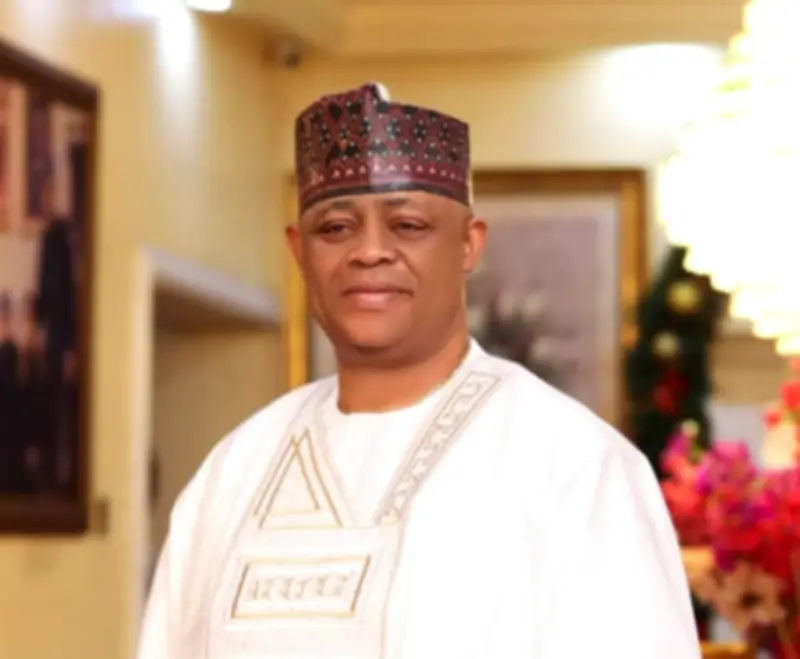
Nigeria's High Commissioner to South Africa, Femi Fani-Kayode, has issued a robust defense of Nigerian nationals living in South Africa, pushing back against recent allegations that they are predominantly involved in drug trafficking and other criminal activities. In a detailed statement, Fani-Kayode emphasized the importance of maintaining strong bilateral ties between the two nations and called for an end to what he described as the blanket vilification of Nigerians.
Allegations and Counterarguments
The controversy began when South African Minister in the Presidency, Khumbudzo Ntshavheni, made remarks suggesting that many Nigerians in South Africa are undocumented and involved in crime. Fani-Kayode responded by questioning the fairness of such generalizations, pointing out that the majority of Nigerians in South Africa are law-abiding and contribute positively to the economy.
He cited official statistics to counter the narrative: "According to census figures, the number of documented and undocumented foreigners living in South Africa is three million. Three million out of a population of 64 million can hardly be described as a migration crisis." He argued that the real issue is wealth creation and distribution, not migration.
Statistical Evidence and Official Data
Fani-Kayode referenced data from South African Minister of Correctional Services, Dr Pieter Groenewald, who confirmed that there are only 28,000 foreign prisoners in South Africa, of which less than 300 are Nigerians. He also highlighted a recent R2 billion ($120 million) drug bust involving South Africans and nationals from a South American country, with no Nigerians implicated.
He further noted that the two former heads of the South African Police Service prosecuted for drug trafficking, and the suspended head currently under investigation, are South Africans, not Nigerians. These facts, he said, demonstrate that crime is not exclusive to any nationality.
Incidents Involving South Africans
Fani-Kayode pointed to recent incidents involving South Africans caught smuggling drugs into other countries. "Was a South African woman who was carrying her three year old child not arrested at the Murtala Mohammed Airport in Lagos in early July for smuggling large amounts of cocaine into our country? Was another South African not caught smuggling 7.5 kilograms of heroin in Thailand a few days later?" He asked whether these incidents mean all South Africans are drug dealers, concluding that they do not.
Treatment of Nigerian Journalist
The High Commissioner also condemned the treatment of Nigerian journalist Ireti Bakare Yusuf by South African ministers, who accused her of being rude and disrespectful when she asked Minister Ntshavheni whether she should apologize for suggesting that all Nigerians are drug dealers. Fani-Kayode described the treatment as unacceptable, noting that she was threatened with removal from the hall and manhandled by security officers.
External Funding Allegations
Fani-Kayode referenced an essay by Nigerian writer Kio Amachree, which alleged that anti-immigrant movements in South Africa are externally funded. Amachree wrote, "I do not know a Nigerian who would sell his soul the way the anti-immigrant mobs of South Africa have done this past month." He cited researchers at Wits University and former President Thabo Mbeki, who called the movement a "funded counter-revolutionary project."
Amachree also noted that the movement's public crowdfunding raised barely thirteen thousand rand, yet it organizes marches, prints shirts, and stages press conferences, suggesting hidden financial backers. He questioned, "Who is writing the cheques?" and pointed to Israeli columnist Grant Arthur Gotchin's essay arguing that "Africa must fragment and South Africa must be the first to fragment."
Pan-African Solidarity and Hope
Despite the tensions, Fani-Kayode expressed hope, citing expressions of fraternity from South African leaders like Minister Firoz Chachalia and Mr Zane Dongor. He emphasized that extremists and racists with hidden agendas will not prevail, and that both nations will work together for the benefit of Mother Africa.
He concluded, "As High Commissioner of Nigeria to South Africa it is my primary duty to strengthen ties between our two great nations and ensure that our relationship remains strong, respectful, mutually beneficial and cordial." He reiterated his commitment to protecting the interests of every documented Nigerian in South Africa who abides by the law.
Call for Responsible Diplomacy
Fani-Kayode urged South African officials to focus on solving poverty and wealth distribution issues rather than demonizing foreign nationals. He stated, "The problem that South Africa has is one of wealth creation and distribution, and not migration. The migrants are simply the scapegoats for what is essentially the failure of the state to effectively fight poverty and better the lives of its citizens."
He called for responsible diplomacy and law enforcement to address challenges of illegal migration and drug-related crimes, rather than blanket vilification of a fellow African nation. He reminded South Africans of Nigeria's contributions to their liberation struggle and the sacrifices of heroes like Nelson Mandela and others, expressing hope for a mutually respectful relationship.




