
Nigeria and Germany have successfully finalized negotiations on a renewed bilateral cooperation framework, setting the stage for the agreement's formal signing in Abuja later today. The framework was negotiated by senior officials from over six Nigerian Ministries, Departments, and Agencies (MDAs), led by the Federal Ministry of Budget and Economic Planning, alongside Germany's Embassy in Nigeria and the Federal Ministry of Economic Cooperation and Development.
Comprehensive Development Coverage
The framework encompasses development cooperation across key sectors including agriculture, energy, healthcare, governance, skills development, and private-sector development. This broad scope reflects the deepening partnership between the two nations.
Nigeria's Vision for the Partnership
Speaking at the opening of the negotiations, the Leader of the Nigerian delegation and Minister of Budget and Economic Planning, Abubakar Bagudu, emphasized that the partnership with Germany is entering a new phase centered on economic transformation, mobilizing private capital, sustainable infrastructure, the energy transition, youth empowerment, and long-term resilience. He described Germany as one of Nigeria's most trusted and enduring development partners, noting that over five decades of cooperation have delivered measurable impact across agriculture, healthcare, renewable energy, vocational education, migration governance, and enterprise development.
Bagudu stated that both countries are repositioning the partnership to respond to emerging global realities by prioritizing innovation, enterprise, investment, and economic competitiveness. He remarked, "The global development landscape is becoming increasingly complex, shaped by economic pressures, geopolitical uncertainties, climate-related challenges, and shrinking development finance. These realities make strong, trusted partnerships even more important."
Key Milestones in Bilateral Relations
The minister highlighted the success of the Nigeria–Germany Binational Commission held in Berlin in November 2025, describing it as a defining moment that strengthened bilateral cooperation across foreign policy, security, energy, trade, migration, culture, and development. He also praised the recently concluded Nigeria–Germany Business Forum in Lagos, which brought together leading business executives from both countries to unlock new commercial opportunities and deepen investment ties.
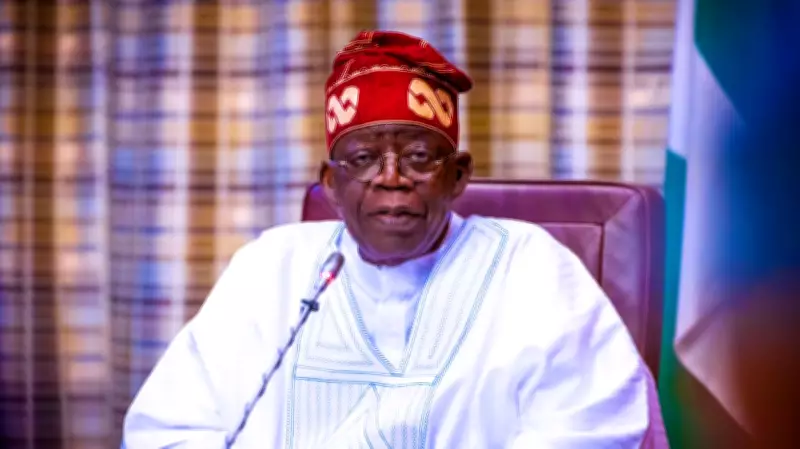
Bagudu noted that President Bola Tinubu's administration is implementing bold structural reforms under the Renewed Hope Agenda to reposition Nigeria's economy for sustainable growth and long-term macroeconomic stability. These reforms include foreign exchange liberalization, enhanced domestic revenue mobilization, strategic investments in infrastructure and human capital, and expanded fiscal decentralization, all of which have significantly strengthened the financial capacity of state governments.
He disclosed that improved fiscal allocations and reform-driven economic restructuring have expanded opportunities for subnational investment partnerships and enhanced states' creditworthiness across the federation. Furthermore, the Federal Government, through the National Economic Council chaired by Vice President Kashim Shettima, has reached key agreements with state governments to coordinate reforms, sustain economic momentum, improve security collaboration, eliminate illegal economic activities, expand infrastructure financing through private capital, and strengthen social inclusion initiatives.
Energy Transition and Renewable Energy
The minister reaffirmed Nigeria's commitment to advancing a just and inclusive energy transition through expanded electricity access, decentralized energy markets, and renewable energy investments. He cited ongoing collaboration with Germany through initiatives such as the Nigeria Energy Support Programme and the Energy Transition Challenge Fund, implemented by GIZ and KfW.
Germany's Perspective
In her remarks, Germany's Ambassador to Nigeria, Ms Annett Günther, described Nigeria as a strategic African partner, noting that its leadership within ECOWAS and the African Union remains critical to regional peace, economic integration, and democratic stability. She expressed optimism about the renewed framework's potential to further strengthen bilateral ties and promote mutual development.




