
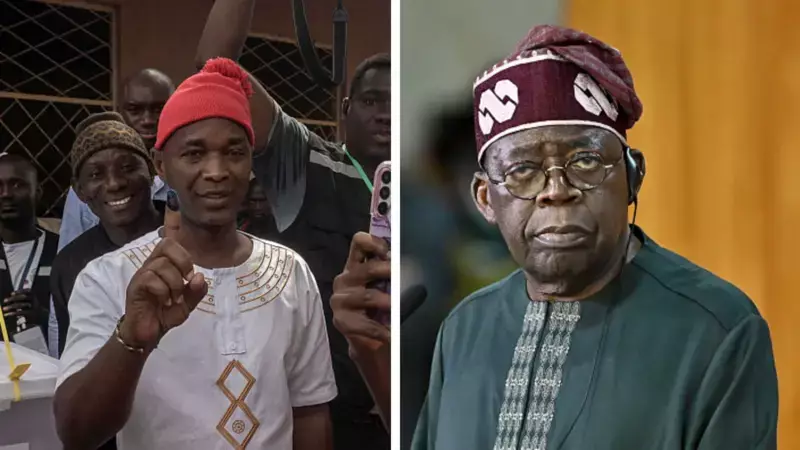
In a significant move to uphold democratic principles, Nigeria has granted political asylum to Guinea-Bissau's opposition leader, Fernando Dias da Costa. This decision comes in the wake of a military takeover that disrupted the nation's electoral process last week.
Asylum Granted Amidst Political Turmoil
The Federal Government of Nigeria confirmed on Monday, December 2, 2025, that it has offered "protection and security" to Mr. Dias da Costa at its embassy in Bissau. The opposition figure, who contested against ousted President Umaro Sissoco Embalo in the November 23 elections, fled his campaign headquarters on Wednesday when armed men attempted to arrest him.
According to a leaked letter from Nigerian Foreign Minister Yusuf Tuggar, cited by local media, the asylum offer is now official. Alkasim Abdulkadir, spokesman for the foreign minister, stated that this action aligns with Nigeria's sovereign responsibility and longstanding commitment to regional peace, stability, and democratic governance.
The Coup and International Condemnation
The military seized control of the coup-prone nation on Wednesday, November 28, just a day before the provisional election results were scheduled for announcement. The powerful opposition party, the African Party for the Independence of Guinea and Cape Verde (PAIGC), reported that its headquarters were "illegally invaded by heavily armed militia groups" in the capital following the takeover.
Motives for the coup remain unclear, with speculation suggesting it may have been carried out with the blessing of President Embalo, who was also briefly arrested on Wednesday. Embalo was later allowed to travel to Senegal and then to Brazzaville, capital of the Republic of Congo, where he is rumoured to have close ties with President Denis Sassou Nguesso.
In response, the Economic Community of West African States (ECOWAS) suspended Guinea-Bissau from the regional bloc. A senior ECOWAS delegation travelled to meet the junta on Monday, reiterating its condemnation of the unconstitutional change of government.
Nigeria's Role in Promoting Regional Stability
Nigeria's intervention is framed as a strategic effort to de-escalate tensions. Abdulkadir emphasized that the decision was "guided solely by the imperatives of peace, human security, and regional stability", in line with ECOWAS principles and Nigeria's historic role as a stabilizing force in West Africa.
The action aims to prevent further deterioration of the situation and promote social cohesion both within Guinea-Bissau and across the sub-region. Opposition leader Dias da Costa had earlier told AFP he believed he won the election and alleged that Embalo "organised" the power grab to prevent him from taking office.
Following Monday's talks with the junta, Sierra Leone's Foreign Minister Alhaji Musa Timothy Kabba described discussions as "productive", though both parties expressed their concerns. The situation remains fluid as regional actors continue to engage with the new military authorities.




