
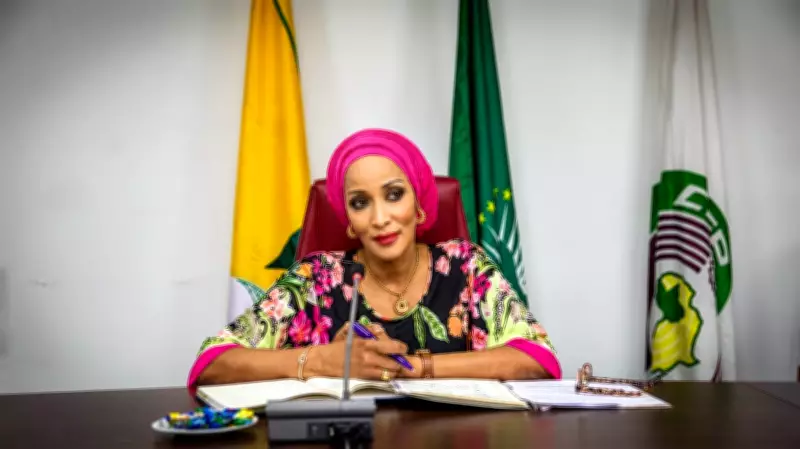
The Minister of Foreign Affairs, Amb. Bianca Odumegwu-Ojukwu, has stated that the Federal Government cannot remain silent over the alleged harassment, humiliation, and extra-judicial killings of Nigerians in South Africa amid renewed xenophobic tensions. She disclosed that President Bola Tinubu has directed Nigerian missions in South Africa to immediately establish a crisis notification unit for distressed citizens, while the government prioritizes the evacuation of Nigerians willing to return home following renewed anti-migrant protests.
National Assembly Initiates Measures
The National Assembly has moved to address the crisis, with the Senate resolving to establish a joint ad hoc committee comprising members of both chambers. The committee, expected to be led by the leadership of the National Assembly, will undertake a fact-finding and diplomatic mission to South Africa to explore lasting solutions to the attacks.
Diplomatic Engagement
In a post on X, Odumegwu-Ojukwu said she held a telephone conversation with South Africa’s Foreign Affairs Minister, Ronald Lamola, over recent anti-migrant protests and rising anti-foreigner sentiments. She said the Federal Government’s immediate priority is the evacuation of Nigerians willing to return home following fears triggered by the protests, including a recent demonstration in Durban on May 6.
The minister raised concerns over attacks targeting Nigerians and urged South African authorities to ensure that perpetrators of extra-judicial killings are held accountable. “I maintained that our government cannot stand by and watch the systematic harassment and humiliation of our nationals resident in South Africa, as well as the extra-judicial killings of our people, and that the evacuation of our citizens who want to return home remains our government’s priority at this time,” she stated.
Safety Measures and Concerns
Odumegwu-Ojukwu noted that although the Durban protest did not turn violent due to heavy security presence, Nigerians were advised by the Nigerian mission to close their shops and remain indoors for safety reasons. She also condemned what she described as “violent and indiscriminate rhetoric” by anti-foreigner political groups in South Africa, warning that such actions could threaten both Nigerians living in South Africa and South African interests in Nigeria.
Discussions with Lamola also focused on inflammatory rhetoric and actions by anti-foreigner groups, which she said placed the lives and property of Nigerians and other foreign nationals at risk. She added that Nigerians have continued to exercise restraint despite the tensions.
Bullying of Nigerian Children
The minister further disclosed that Nigerian children, including those born to Nigerian and South African parents, popularly referred to as “Sougerians”, are allegedly being bullied in schools and told to “return to their country”. She described the situation as traumatic and unacceptable. Odumegwu-Ojukwu said Lamola acknowledged South Africa’s responsibility to protect affected children and assured that education authorities are taking steps to discourage such behaviour.
Repatriation Requests Surge
The President of the Nigerian Citizens Association in South Africa, Frank Onyekwelu, disclosed that more than 130 Nigerians have registered for voluntary repatriation from the country following renewed xenophobic attacks and worsening living conditions. Onyekwelu made the disclosure during an interview on Channels Television’s programme, The Morning Brief. “As we speak, the number has exceeded 130. In addition, there are other Nigerian citizens who have applied for voluntary and free repatriation,” he said.
His remarks came amid escalating xenophobic attacks in South Africa, which reportedly claimed the lives of two Nigerians and heightened fears within Nigerian communities. The Federal Government had earlier announced plans to evacuate Nigerians willing to return home, with more than 130 individuals already registered for voluntary repatriation flights.
Reasons for Leaving
Onyekwelu said xenophobia is not the sole reason many Nigerians are seeking to return home. “Many Nigerians are leaving South Africa due to economic hardship,” he said. “Some are struggling to survive amid the high cost of living. Others face challenges with documentation, such as delays in renewing residence permits or obtaining work permits, which limit their ability to trade or gain employment.” He added that some Nigerians who had lived and worked in South Africa for years have lost their jobs and now view returning home as a better option.
Onyekwelu also cited health concerns as another reason behind the growing requests for repatriation, noting that access to healthcare for foreigners has become more expensive and less accessible.
NBA Condemns Attacks
In a related development, the National Executive Council (NEC) of the Nigerian Bar Association condemned the xenophobic attacks against Nigerians and other foreign nationals in South Africa. In a statement issued after its meeting in Awka, the NBA described the attacks as a violation of fundamental human rights and inconsistent with the principles of human dignity, African unity and mutual respect among nations.
The association said targeting individuals based on nationality is unacceptable and must not be tolerated in any society governed by the rule of law. It called on the South African government to take urgent steps to end the attacks, protect all persons within its jurisdiction and ensure perpetrators are brought to justice. The NBA also urged the Nigerian government to intensify diplomatic and consular measures aimed at safeguarding the rights, safety and welfare of Nigerians residing in South Africa.




