
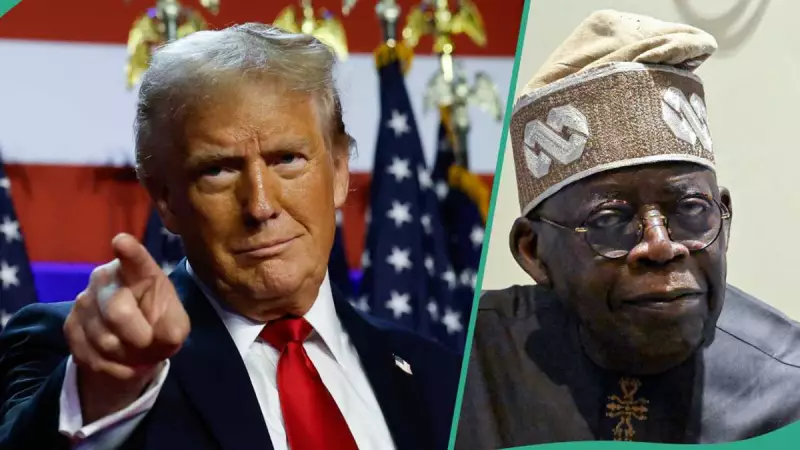
The administration of President Bola Tinubu has firmly rejected recent calls from United States lawmakers and a Nigerian-American academic for the abolition of Sharia law in Nigeria, labelling such external pressure as an infringement on national sovereignty.
Presidency Dismisses Foreign Interference
Special Adviser to the President on Policy Communication, Daniel Bwala, addressed the issue during an interview on Arise TV on Thursday, December 4, 2025. He was responding to suggestions made by Ebenezer Obadare, a senior fellow at the Council on Foreign Relations, and some US legislators.
Bwala stated unequivocally that the United States possesses no legal or moral authority to dictate constitutional amendments to Nigeria. He argued that any attempt by a foreign nation to instruct Nigeria on its constitutional matters would constitute a direct assault on its territorial integrity and sovereign rights.
Sharia as a State Matter, Not Federal Policy
In his defence of Nigeria's legal framework, the presidential spokesperson clarified a critical point of the nation's governance structure. He emphasised that Sharia law is not a federal policy but operates as a state-level legal system.
This arrangement is permitted under Nigeria's federal constitution, which grants states certain legislative powers. Bwala noted that Sharia is currently implemented in 12 northern states, and its existence is a domestic issue not subject to foreign approval.
"We differ with them on this idea of amending our constitution," Bwala said. "Nigeria is a sovereign state, has never been colonised by America anywhere, and we are not Venezuela."
Background of US Pressure and Security Concerns
The controversy stems from a joint House briefing in the US on Tuesday, December 2. During the event, Ebenezer Obadare urged American lawmakers to pressure the Nigerian government to abolish Sharia law and disband the religious police known as the Hisbah commissions.
Obadare linked his demand to US President Donald Trump's October directive, which designated Nigeria as a Country of Particular Concern (CPC). He argued that extremist groups like Boko Haram and the Islamic State West Africa Province (ISWAP) exploit the Sharia framework and Hisbah officials to impose radical ideology and operate with impunity.
He called for sustained US pressure on Nigeria regarding these issues.
In related developments, Bwala also disclosed that the Tinubu administration is poised to reveal the identities of individuals and networks financing terrorism within the country. He stated that the government is taking decisive security measures, which will soon become evident to the public.




