
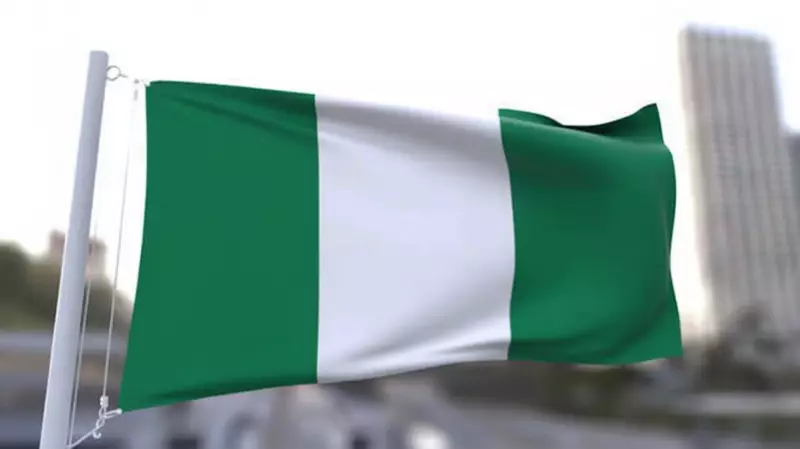
On October 31, 2025, the United States government formally labeled Nigeria a "Country of Particular Concern." This significant diplomatic move has sent shockwaves through Nigeria's political and international relations circles. For countless citizens, the announcement felt both alarming and unjust, particularly amid allegations that certain diaspora elements provided exaggerated or unverified reports that influenced the American decision.
The Peril of Weaponized Information and a Historical Warning
It is an unfortunate tactic for some groups to leverage foreign governments to settle domestic political scores. However, history provides a stark lesson on the devastating fallout of such actions. When external powers act on biased or politicized intelligence, the results can be catastrophic.
We need not look further than the 2003 invasion of Iraq, justified by claims of weapons of mass destruction that were never discovered. The outcome was the ruin of a nation, catastrophic loss of life, and regional chaos that persists today. The Iraqi tragedy was a product of both foreign intervention and internal fractures exploited from outside.
This precedent forces a critical question upon Nigeria: shall we allow ourselves to be pushed down a similarly dangerous path by narratives built on selective facts?
Real Consequences Beyond a Symbolic Label
The U.S. designation is far from a mere diplomatic slap on the wrist. It carries the tangible threat of economic sanctions, trade restrictions, withdrawal of military cooperation, and international isolation. In our interconnected world, this label can stifle investment, damage credit ratings, limit access to technology, and cripple security partnerships.
The adage holds true: when America sneezes, the world catches a cold. Here, it is the average Nigerian who will suffer the worst of the fever. It is therefore profoundly disturbing that some citizens would bypass all domestic avenues for dialogue and redress to present one-sided allegations of religious persecution to a foreign power, inviting punitive measures that will hurt all Nigerians indiscriminately.
A Dual Call: For Responsible Citizenship and Government Action
True patriotism is not blind loyalty. It is the commitment to address national flaws with honesty and constructive intent, without burning down the very house we seek to repair. Those lobbying abroad for sanctions must realize that such measures will not distinguish between Christian or Muslim, Yoruba or Igbo. One must wonder: if they eventually seek to govern, how will they lead a nation they actively helped to weaken?
Nigeria belongs to every one of us. Our disputes, however intense, must be resolved within the frameworks of our laws, through dialogue and democratic engagement—not by appealing for foreign intervention.
To its credit, the Federal Government has responded with urgency. Following the October 31 designation, Abuja dispatched a high-powered delegation to Washington D.C. to engage directly with U.S. lawmakers, committees, and policy experts. Their goal was to present factual evidence, correct the record, and ensure Nigeria's authentic story was heard.
These efforts are showing early promise. This week, a delegation from the U.S. Congress is in Nigeria, holding meetings with government officials, religious leaders, civil society, and security agencies. This represents a crucial pivot from decisions based on distant reports to assessments grounded in firsthand engagement.
To solidify this approach, the Presidency should empower a dedicated Fact-Finding and Diplomatic Response Committee. This body would be tasked with collating evidence, verifying international allegations, monitoring global narratives, and providing transparent updates to partners worldwide. In this battle, accuracy and openness are our strongest shields; proactive diplomacy, our most effective weapon.
Concurrently, Nigeria's embassies worldwide must be fully mobilized to articulate the nation's position with clarity and conviction. While progress is being made in filling key ambassadorial posts, more is required. We cannot afford passive representation or silent missions when the narrative about Nigeria is being shaped in real-time across the globe.
An Appeal to the Diaspora and International Partners
Nigeria's global diaspora is renowned for its vibrancy and success. Their remittances support millions, and their skills enhance industries worldwide. Yet, a fringe element within this community risks tarnishing its hard-earned reputation by circulating alarmist, unverified portrayals of their homeland.
This is the moment for responsible diaspora leaders, cultural associations, and professionals to step forward. They must champion balanced narratives, reject divisive activism, and build bridges of understanding. In the digital era, where misinformation spreads at the speed of emotion, measured voices must rise above the din.
To our partners in the United States, we urge fairness, balance, and context. Nigeria is a complex democracy navigating immense pressures of security, diversity, and development. Constructive engagement, not punitive declarations, is the way to strengthen our shared democratic values. Broad-stroke designations based on contested information risk empowering extremists and undermining reformers. A destabilized Nigeria serves no one's interests and could trigger crises with global repercussions.
From Libya to Iraq to Syria, the world has seen the ruin that follows when internal divisions are exploited by external forces. Those who invite foreign pressure should remember history's harsh judgment on collaborators. When the dust settles, they may find themselves without a stable homeland.
Nigeria has challenges, as all nations do. But these issues must be confronted from within, with truth and unity, not weaponized from abroad. The voice of reason must now prevail. Nigeria must defend itself not with anger, but with facts; not with propaganda, but with principled diplomacy. We call on the Ministry of Foreign Affairs to sustain its vigorous efforts, on civil society to speak with responsibility, and on every Nigerian to recognize that in geopolitical confrontations, there are rarely winners—only survivors. Our weapons must be patriotism, prudence, and unwavering truth.
Oluwadare is a Professor of Political Science at the Nigerian Defence Academy, Kaduna.




