
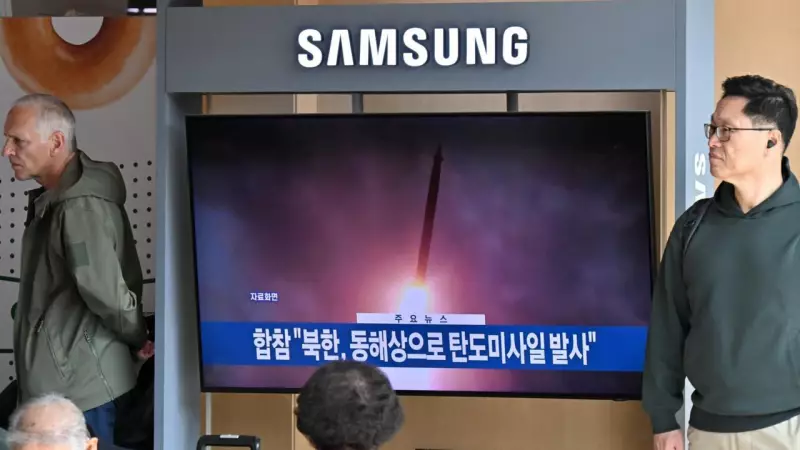
North Korea has conducted a ballistic missile launch on Friday, November 7, in what appears to be a direct response to the United States' recent approval of South Korea's plan to build a nuclear-powered submarine.
Immediate Response and Missile Details
South Korea's Joint Chiefs of Staff confirmed the missile was fired toward the East Sea at approximately 12:35 pm local time from an area north of Pyongyang. The projectile traveled approximately 700 kilometres before landing in waters outside Japan's exclusive economic zone.
Japanese Prime Minister Sanae Takaichi quickly addressed the situation, confirming that no damage or injuries were reported from the launch. However, Japanese officials expressed strong condemnation of North Korea's actions.
International Reactions and Regional Tensions
The missile test comes just one week after US President Donald Trump approved Seoul's proposal to develop a nuclear-powered submarine. Military analysts had previously warned that this decision would likely provoke a strong reaction from Pyongyang.
Russia immediately defended North Korea's actions, with Kremlin spokesman Dmitry Peskov stating that Pyongyang had the "legitimate right" to take necessary security measures. This support comes as Russia and North Korea have strengthened their partnership amid Moscow's ongoing war in Ukraine.
In contrast, Japan delivered a strong condemnation of the launch. Defence Minister Shinjiro Koizumi described North Korea's repeated ballistic missile tests as "absolutely unforgivable" and emphasized the need to accelerate Japan's defence upgrades.
Strategic Implications and Future Outlook
Ahn Chan-il, a prominent North Korea researcher and defector, explained that Pyongyang would view South Korea's nuclear submarine plan as a serious threat. Such vessels can patrol near North Korean waters for extended periods and potentially monitor or intercept submarine-launched ballistic missiles.
While President Trump indicated that South Korea would build the submarine in the United States, Seoul has suggested it might construct the vessel domestically. Nuclear-powered submarines represent a significant military advantage as they can remain submerged much longer than diesel-powered alternatives, making detection considerably more difficult.
This latest missile test continues North Korea's pattern of increased weapons testing in recent years. Analysts believe these activities serve multiple purposes:
- Refining precision strike capabilities
- Applying pressure on the United States and South Korea
- Testing weapons that could potentially be supplied to Russia
The diplomatic landscape remains complex, with North Korea describing itself as an "irreversible" nuclear state since the collapse of talks between Kim Jong Un and Donald Trump in 2019. Recent developments, including Kim's public appearances alongside Russian President Vladimir Putin and China's Xi Jinping, signal his elevated status among powers opposing Western influence.
Despite the current tensions, South Korean lawmaker Lee Seong-kweun revealed that intelligence suggests Kim Jong Un remains open to dialogue with the United States and might seek talks when conditions become more favourable.




