
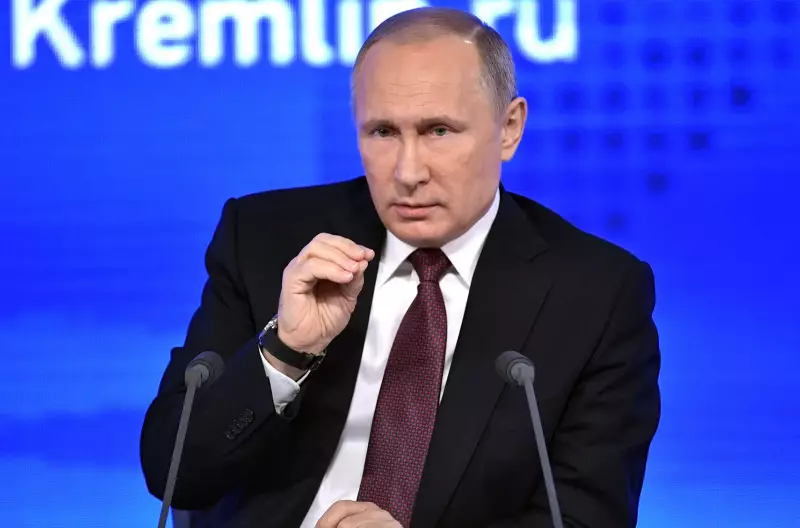
Russian President Vladimir Putin has made a fresh and firm declaration, stating that Moscow is determined to seize control of Ukraine's Donbas region. This vow comes as Ukrainian officials gear up for another crucial round of peace discussions with the United States.
Putin's Unwavering Stance on Donbas and "Novorossiya"
In a recent interview with India Today, President Putin left no room for ambiguity. He insisted that Russia would "liberate Donbas and Novorossiya in any case," whether through military force or other means. He directly linked Russia's definition of victory to the complete capture and control of these territories.
When pressed on what constitutes victory, Putin replied, "We will finish it when we achieve the goals set at the beginning of the special military operation, when we free these territories." This reaffirms a core Kremlin demand: that Ukraine surrenders areas in the Donbas, which Moscow claims to have annexed but does not fully govern.
The Russian leader also revived the historical term "Novorossiya" (New Russia), a concept from the Russian Empire era that was referenced during the annexation of Crimea in 2014.
Diplomatic Moves Amidst Military Stalemate
This hardline rhetoric was delivered shortly after Putin met a US delegation in Moscow, led by special envoy Steve Witkoff and which included Jared Kushner. Putin described those negotiations as lengthy and detailed but noted disagreements with parts of the American proposal.
Simultaneously, Ukrainian officials Rustem Umerov and Andrii Hnatov are traveling to Miami, USA, to meet with American officials. Their mission, according to President Volodymyr Zelensky, is to get "full information" on Russia's latest position and understand the reasons Putin may use to prolong the war.
This upcoming session follows another high-level meeting earlier in the week, which US Secretary of State Marco Rubio described as "productive."
The Gap Between Ambition and Reality
Despite Putin's confident claims, analysts point to a significant gap between Russia's ambitions and its military progress on the ground. A recent assessment by the Institute for the Study of War suggested that at the current pace of advancement, Russian forces might not fully seize the Donetsk region until 2027.
Both Russia and the US have remained vague about concrete progress following last month's leak of a 28-point US peace plan. Several elements of that proposal were seen as favorable to Moscow and had been previously rejected by Ukraine and European allies.
Yury Ushakov, Putin's foreign policy advisor, confirmed that territorial issues were discussed and are essential. He noted that some parts of the American proposal were "more or less acceptable" while others were not.
US President Donald Trump characterized the Moscow meeting as "very good," but added that further cooperation from both sides is needed before any major breakthrough can occur. The world now watches as military posturing and delicate diplomacy continue on parallel tracks.




