
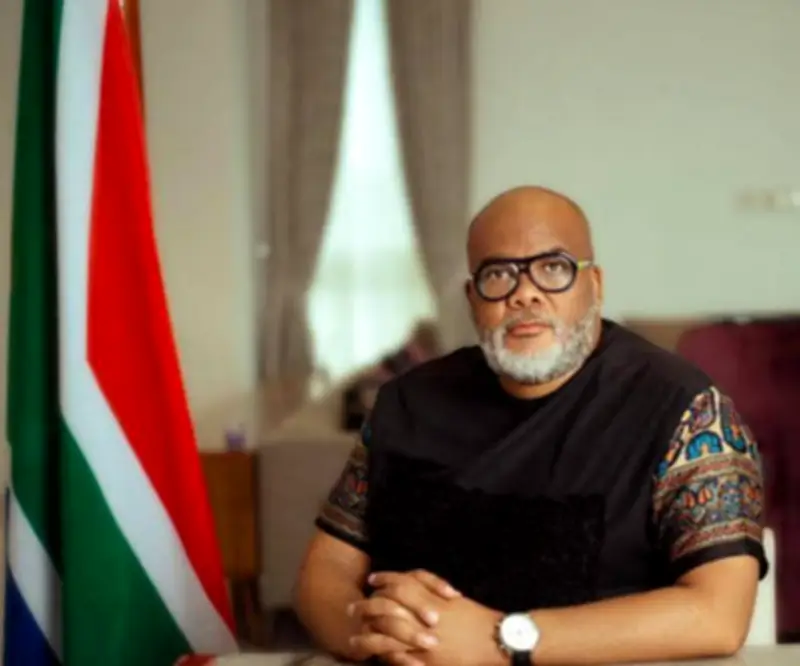
South Africa's Consul-General to Nigeria, Prof. Bobby Moroe, has dismissed claims that Nigerian nationals are being attacked in South Africa because of their romantic relationships with South African women. In an interview with Punch, Moroe said it is not true that Nigerians are targeted for such reasons, emphasising that South Africa is a constitutional democracy where individual freedoms are protected.
Constitutional Democracy and Love Across Borders
Moroe argued that the narrative is unfounded, noting that South African men also fall in love with women from other countries. 'It cannot be. We live in a constitutional democracy where everybody is allowed to exercise their freedoms, and nobody, no matter how they feel, is permitted to interfere with people's preferences. Love knows no borders,' he said.
He acknowledged the popular narrative but insisted it is not accurate. 'I am quite aware of the popular narrative, but I do not think it is really true because South African men also fall in love with women from other countries. Our sisters may have very good reasons why they prefer Nigerian men, but it is a good thing because we are expanding,' Moroe added.
Cultural Integration and Personal Experience
The Consul-General also addressed claims that South African men dislike Nigerian men, citing his own friendships with Nigerians. 'It is also not true that South African men do not like Nigerian men. I am a classic example because of my association with Igbos. I have friends from the South-East, including Anambra and Abia states. I have an interest in Nigerian culture,' he stated.
Moroe highlighted that foreign nationals have been in South Africa for many years, but South Africans are also foreigners in other countries, including himself. He said the main complaints from South Africans relate to foreign nationals, including Nigerians and Ghanaians, who do not respect the country's laws, stay illegally, and raise concerns about undocumented individuals.
Illegal Stay and the Xenophobia Label
'I do not think any country in the world would allow anybody to live within its borders illegally. But when South Africa raises concerns about that, we are called xenophobic, and I think it is unfair to use that label without justification,' Moroe said. He noted that peaceful marches, which the Constitution allows, are also labelled xenophobic, whereas similar events in other countries, such as Ghana, are not.
'We have realised that the term “xenophobia” has become synonymous with South Africa alone, creating the notion that African unity must happen only in South Africa. I think many African countries have been very unfair to South Africa. By far, we are one of the biggest hosts of foreign nationals in Africa, even before 1994,' he added.
Extrajudicial Killing Allegations Addressed
Moroe also addressed allegations of extrajudicial killings, recounting an incident involving a Nigerian national in Cape Town. 'One of the issues raised was alleged extrajudicial killings. I can give you a classic example of what happened a few weeks ago involving a Nigerian national who was to be arrested in Cape Town. He was accused of selling certain substances. Upon hearing that he was going to be arrested, he swallowed some of the substances. Unfortunately, that caused severe complications, and he died before the arrival of the police,' he explained.
The Consul-General said the death was attributed to an extrajudicial killing based on reports received, but he noted the accuracy is uncertain. He added that individuals sometimes resist arrest and attack law enforcement officers, who must protect themselves. 'As a country, we take responsibility where necessary, but I think it would be very unfair for us to take responsibility for acts that have nothing to do with what we are supposed to be responsible for,' Moroe concluded.




