
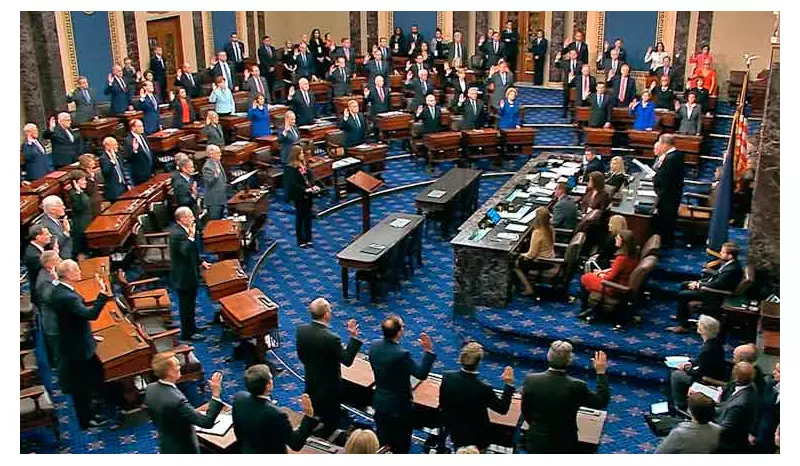
In a significant move, the United States Senate has moved to restrict President Donald Trump's ability to conduct further military operations in Venezuela. The vote, which took place on Thursday, saw a majority of senators back the measure aimed at reining in executive power.
Senate Votes to Curb Presidential War Powers
The Senate voted 52-47 to advance a War Powers Resolution concerning Venezuela. This procedural vote sets the stage for a final decision next week. The resolution requires President Trump to seek explicit approval from Congress before deploying the U.S. military in Venezuela again.
The move comes less than a week after President Trump authorized a military strike that led to the capture of Venezuela's leader, Nicolás Maduro. The resolution, needing only a simple majority to pass, succeeded in the Republican-controlled chamber with bipartisan support.
Bipartisan Support and Key Arguments
The legislation was spearheaded by Democratic Senator Tim Kaine of Virginia. It gained crucial cross-party backing, being co-sponsored by Republican Senator Rand Paul of Kentucky and Democratic Senators Adam Schiff of California and Chuck Schumer of New York.
In a notable show of dissent, five Republicans joined all 47 Democrats in voting 'yes' to advance the resolution. Senator Kaine launched a strong critique of the President's actions, framing them as a distraction from domestic issues.
"Instead of responding to Americans’ concerns about the affordability crisis, President Trump started a war with Venezuela that is profoundly disrespectful to U.S. troops, deeply unpopular, suspiciously secretive and likely corrupt," Kaine stated. He emphasized the constitutional necessity for congressional authorization, declaring, "Trump’s war is also clearly illegal because this military action was ordered without the congressional authorization the Constitution requires."
Next Steps and Political Implications
The vote on Thursday was a procedural motion. It paves the way for a full Senate vote on the measure expected next week. This final vote is also anticipated to pass, as it will require the same simple majority threshold.
Senator Kaine issued a direct challenge to his colleagues, urging them to uphold their constitutional duties. "To my Senate colleagues: Enough is enough," he said. "You were sent here to have courage and to stand up for your constituents. That means no war without a debate and vote in Congress."
This development marks a critical moment in the ongoing tension between the legislative and executive branches over war powers. It directly challenges the President's authority to unilaterally engage in military action, setting a precedent for future conflicts.




