
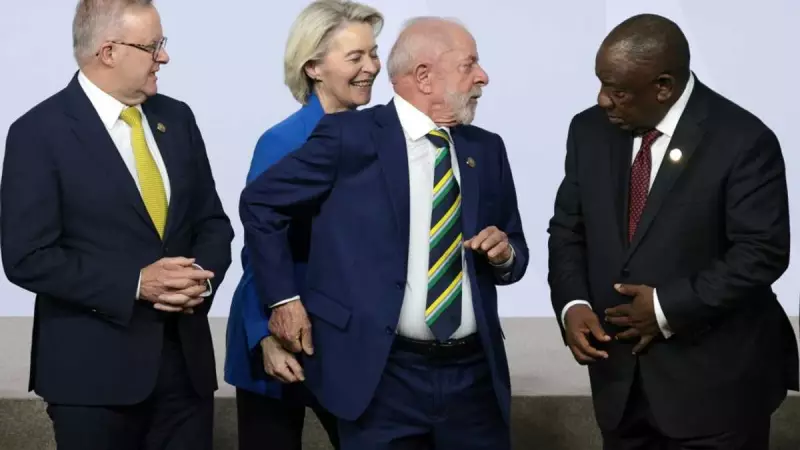
South Africa has declared it will voluntarily sit out the next series of G20 meetings in 2026, following a formal exclusion by the United States, which now holds the group's presidency. The decision marks a significant diplomatic development after months of escalating tensions between Pretoria and Washington.
A Diplomatic Standoff Escalates
The United States assumed the year-long presidency of the G20 this month. Its tenure follows a period where it largely boycotted meetings during South Africa's leadership of the group, including the major summit held in Johannesburg in November. This move represents a sharp escalation in the Trump administration's criticisms of South African policies.
On Wednesday, US Secretary of State Marco Rubio reiterated that South Africa would not receive an invitation to the US-hosted G20 events. He repeated a series of complaints, among them the unsubstantiated claim that the South African government intentionally discriminates against the white Afrikaner minority.
South Africa's 'Commercial Break' Response
In a pointed response, Presidential spokesman Vincent Magwenya stated that South Africa would pause its involvement. He framed the decision with a media metaphor, saying the nation would "take a commercial break until we resume normal programming." He confirmed that participation would recommence when the G20 presidency rotates to Britain the following year.
Magwenya, in an interview with the Sunday Times published late Wednesday, clarified that South Africa does not anticipate other G20 member nations to boycott the US presidency or actively campaign for Pretoria's reinstatement. "In fact it would be unhelpful if the entire year goes to waste and the G20 is collapsed," he noted pragmatically.
Broader Context and Expectations
However, the spokesman added that South Africa would expect fellow members to "register their displeasure with the US in defence of multilateralism and the spirit and purpose of the G20." This highlights the underlying concern that the US action undermines the core cooperative principles of the forum.
The G20, which includes the world's largest economies, the European Union, and the African Union, represents a colossal 85 percent of global GDP and two-thirds of the planet's population. The recent summit in Johannesburg was historically significant as the first ever held on African soil. It attracted numerous world leaders, even from non-member states, but was notably boycotted by US President Donald Trump.
The current diplomatic rift is not isolated. The Trump administration has launched broadsides against South Africa over various policies. Key actions include expelling the South African ambassador in March and imposing 30 percent trade tariffs, which Pretoria continues to legally challenge. The exclusion from the G20 is the latest and most high-profile penalty in this ongoing dispute.




