
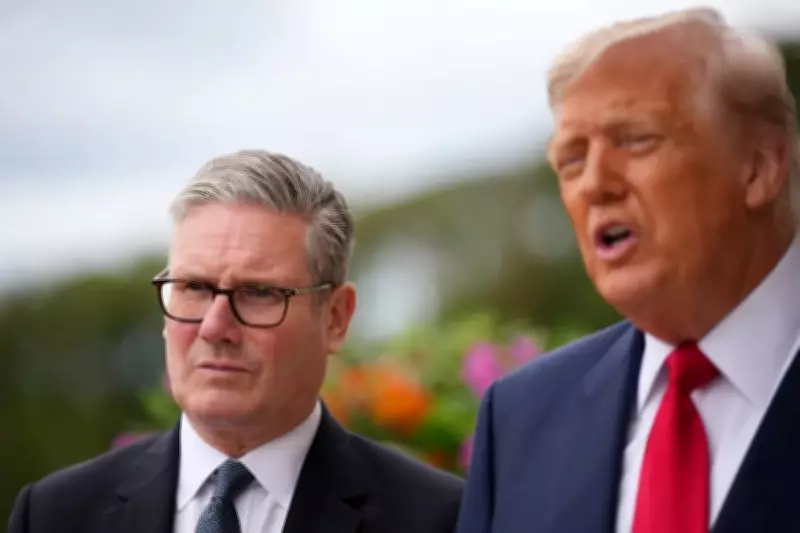
Starmer and Trump Coordinate on Strait of Hormuz Shipping Plan
British Prime Minister Keir Starmer announced on Friday, April 10, that he engaged in a detailed discussion with U.S. President Donald Trump regarding the establishment of a practical plan to restore shipping through the Strait of Hormuz. This conversation, which took place a day earlier, focused heavily on military capabilities and the intricate logistics required for escorting commercial vessels through this critical waterway.
Focus on Logistics and Coalition Building
Speaking during his official visit to the Gulf region, Starmer emphasized the urgent need for a coordinated international response to ensure freedom of navigation. He revealed that the United Kingdom has been actively assembling a coalition of countries to develop comprehensive strategies, encompassing both diplomatic and military dimensions for the area.
The primary emphasis of the talks with President Trump was on the practical aspects of moving vessels safely through the Strait, which remains largely at a standstill despite a recently announced cessation of hostilities between the United States and Iran. Starmer stated, "We've been pulling together a coalition of countries... working on a political, diplomatic plan, but also looking at military capabilities and the logistics of actually moving vessels through the Strait." He added, "That was the focus of the discussion last night, a focus on a practical plan in relation to navigation."
Gulf Tour and Fragile Ceasefire Context
The Prime Minister's Gulf tour, which included strategic stops in Saudi Arabia, the United Arab Emirates, Bahrain, and Qatar, was aimed at consolidating the two-week ceasefire agreement. Starmer noted that while the ceasefire terms include an agreement to open the Strait, the current situation remains "fragile." This assessment underscores the complexity of achieving a lasting resolution in the region.
President Trump has recently issued warnings to Iran against imposing any fees or tolls for passage through the waterway. He asserted via social media that oil shipments must resume immediately. Starmer echoed this stance, affirming that the Strait must remain open for "toll-free navigation" to help stabilize volatile global energy prices, which are crucial for economic stability worldwide.
NATO and Broader Security Implications
When questioned about whether the conversation touched upon U.S. rhetoric concerning NATO, Starmer did not provide a direct answer. However, he strongly reaffirmed the importance of the alliance, describing NATO as a "defensive alliance which, for decades, has kept us much safer than we would otherwise have been." He emphasized that preserving NATO is in the mutual interest of both Europe and the United States, highlighting its role in broader global security frameworks.
International Coordination and Future Steps
In a related development, the United Kingdom recently hosted military planners from over 40 countries to coordinate efforts aimed at protecting vital shipping routes. As the two-week ceasefire window continues, both London and Washington have committed to maintaining close contact to advance toward a durable and peaceful resolution in the region. This collaborative approach underscores the international community's vested interest in securing one of the world's most strategic maritime chokepoints.
The discussions between Starmer and Trump mark a significant step in addressing the immediate logistical challenges while laying the groundwork for sustained diplomatic engagement. The outcome of these efforts will be closely monitored by global markets and governments alike, given the Strait of Hormuz's pivotal role in international trade and energy security.




