
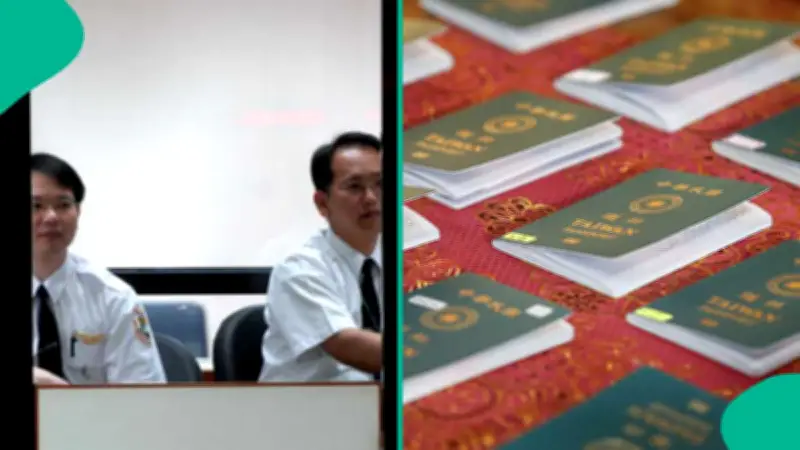
Taiwan's Ministry of Foreign Affairs has suspended visa applications from Moroccan nationals, with the measure taking effect on Thursday, July 30, under the principle of reciprocity. The ministry confirmed that the suspension came in direct response to Morocco's decision to halt the processing of travel authorisation letters for Taiwanese visitors. While exceptional cases may still be considered, the ministry acknowledged that the move has already disrupted travel and bilateral exchanges between the two nations.
The diplomatic tangle began when Morocco's government instructed its embassies and consulates worldwide to stop accepting new visa confirmation letter applications from Taiwanese nationals. Morocco's embassy in Japan, which handles Taiwan-related applications due to the absence of direct diplomatic ties, informed travel agencies of the halt on July 23, according to Business Insider.
How the Visa System Worked
Before the suspension, Taiwanese nationals travelling to Morocco for business or tourism were required to obtain a visa confirmation letter. The application process went through Morocco's embassy in Japan and was forwarded to Rabat for approval. Once approved, successful applicants could collect a visa on arrival at a Moroccan airport, a system that facilitated travel for many Taiwanese visitors.
Travellers who secured confirmation letters before July 20 are still permitted to use them, provided those documents remain valid. Taiwan's ministry has urged Morocco to restore the previous travel arrangements and said it would continue reviewing its policy before deciding on any further steps. The uncertainty has left many prospective travellers in limbo, with travel agencies reporting confusion about the status of pending applications.
Broader Diplomatic Context
The visa dispute surfaced at the same time as King Mohammed VI marked 27 years on the throne, an occasion that drew congratulations from several foreign leaders recognising Morocco's economic growth and expanding diplomatic reach. Chinese President Xi Jinping was among those who sent messages to the monarch, a gesture that carried added weight given Morocco's support for the One-China policy and the kingdom's lack of formal diplomatic relations with Taiwan.
Separately, Morocco faced renewed pressure along its northern border, where a large number of migrants crossed into Ceuta, Spain's territory on the North African coast. The influx overwhelmed local services and prompted Madrid to deploy additional security personnel. More than 48,000 people reportedly returned to Morocco following the incident, underscoring the scale of the migration challenge that Rabat continues to manage.
The Ceuta situation and the Taiwan visa row are unrelated incidents, but together they reflect the range of diplomatic and migration pressures Rabat is navigating as it deepens ties with partners across Africa, Europe, Asia and the Middle East through new investment, trade and security arrangements. Morocco has been actively courting international partnerships, and the visa dispute now threatens to complicate one such relationship in the Asia-Pacific region.
Related: Saudi Arabia Restricts Travelers from Three African Countries
In a related development, Saudi Arabia has announced a temporary ban on travellers from three African countries as part of new measures aimed at preventing the spread of Ebola into the Kingdom. The Saudi Public Health Authority (Weqaya) said the restrictions were introduced as a precaution following Ebola outbreaks reported in parts of Africa. The authority maintained that Saudi Arabia has not recorded any confirmed Ebola case since 2019 and that its public health system remains on high alert.
For Moroccan and Taiwanese travellers, the immediate impact of the visa suspension is tangible. Moroccan students, businesspeople and tourists who frequently visit Taiwan will now need to navigate the new restrictions, while Taiwanese citizens with plans to travel to Morocco must reconsider their arrangements. Both governments are reviewing their respective policies, but no timeline has been given for a possible resolution. As the diplomatic review continues, the international community will be watching to see whether this reciprocal measure escalates into a deeper row or is resolved through quiet diplomacy.




