
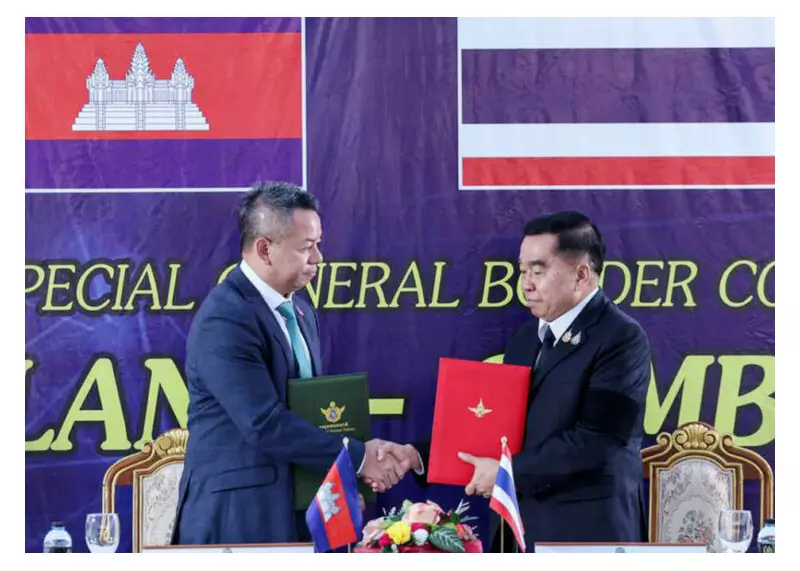
Thailand and Cambodia have reached a crucial agreement for an immediate ceasefire, putting a halt to nearly three weeks of intense and deadly fighting along their shared border. The clashes, which resulted in dozens of casualties, also forced close to one million people from their homes, creating a severe humanitarian crisis.
Terms of the Ceasefire Agreement
The defence ministers from both nations issued a joint statement on Saturday, 27 December, confirming that the ceasefire officially began at noon local time (05:00 GMT). According to the terms, military forces from Thailand and Cambodia will maintain their current positions on the front lines. This stability is intended to allow the hundreds of thousands of displaced civilians living in border communities to safely return to their homes.
A significant part of the deal involves the release of 18 Cambodian soldiers who have been detained by Thailand since July. Their freedom is conditional, hinging on the ceasefire holding firm for a continuous period of 72 hours. Furthermore, both countries have committed to starting the dangerous but essential work of removing landmines from the affected border areas.
Diplomatic Breakthrough and Underlying Tensions
This breakthrough followed days of intense negotiations, which received diplomatic support from major global powers like China and the United States. However, the path to peace has been rocky. Thailand had previously expressed deep scepticism about agreeing to another ceasefire, pointing to the collapse of an earlier truce. Thai officials also accused Cambodia of trying to internationalise the conflict rather than resolve it bilaterally.
Thailand's Defence Minister, Natthaphon Narkphanit, framed the new agreement as a direct test of Cambodia's commitment to peace. He issued a stern warning, stating that Thailand would not hesitate to exercise its right to self-defence under international law if Cambodia violates the ceasefire.
A Century-Old Dispute Escalates
The recent violence marks a severe escalation of a border dispute that has simmered for more than a century. Tensions flared dramatically earlier this year, centred around a contested ancient temple site. Fighting intensified throughout December, with both sides repeatedly trading accusations of ceasefire violations.
The conflict reached a new peak on Friday, 26 December, when Thailand confirmed it had carried out air strikes inside Cambodian territory. Cambodia condemned these attacks, describing them as indiscriminate and alleging they targeted civilian areas, not just military positions. The new ceasefire agreement aims to end this cycle of violence and create a foundation for more lasting discussions.




