
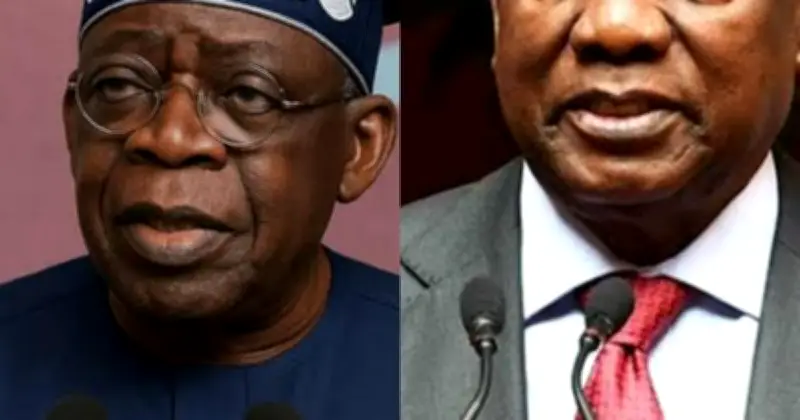
President Bola Tinubu has declined to meet with South Africa's special envoy, Minister of International Relations and Cooperation Ronald Lamola, amid renewed xenophobic attacks targeting Nigerians in South Africa. The president directed the delegation to instead meet with Nigeria's Minister of State for Foreign Affairs, Ambassador Sola Enikanolaiye, according to a statement from the Nigerian Ministry of Foreign Affairs. The snub is seen as a clear signal of Nigeria's frustration over the slow response to the attacks.
Diplomatic Snub in Abuja
The South African delegation arrived in Abuja as part of efforts by President Cyril Ramaphosa to address rising tensions between the two nations. However, Tinubu refused to grant a presidential audience, signaling Nigeria's displeasure over the repeated attacks on its citizens. Nigerian officials have documented numerous cases of violence against Nigerians, including both undocumented migrants and legal residents. The delegation was received by Ambassador Enikanolaiye, who conveyed Nigeria's strong concerns.
Ambassador Enikanolaiye stated that the Nigerian government has detailed records of attacks and questioned situations where South African authorities appeared unable or unwilling to protect foreign nationals. He emphasized that the violence has affected Nigerians living and doing business in South Africa, creating an atmosphere of fear and insecurity.
Nigeria's Demands for Stronger Action
During the discussions, Nigeria urged South Africa to take stronger measures to prevent xenophobic and Afrophobic attacks. The Nigerian government emphasized that such incidents were damaging diplomatic relations between the two countries. It also noted that while it does not condone criminal activities by its citizens abroad, alleged offenders should face lawful prosecution rather than mob violence. The government called for concrete actions to ensure the safety of all African migrants in South Africa.
Nigeria's Minister of State for Foreign Affairs reiterated that the violence has affected many Nigerians. He stressed that the attacks are not only a violation of human rights but also a threat to African unity.
South Africa's Response
Minister Lamola responded that the South African government firmly opposes xenophobia, racism, and discrimination. He reiterated that attacks against foreign nationals are not supported by South African authorities and that the government is committed to protecting all residents. However, Nigerian officials expressed skepticism, pointing to a lack of effective enforcement and accountability.
Lamola's visit followed a renewed wave of anti-immigrant sentiment in South Africa, where foreign nationals—including Nigerians—have faced attacks and businesses have been targeted. The South African delegation sought to ease tensions and reaffirm bilateral ties, but the presidential snub highlighted the gravity of the situation.
Evacuations and Regional Calls
More than 1,400 Nigerians have been evacuated from South Africa following recent incidents, according to Nigerian authorities. The evacuations underscore the severity of the violence and the failure to ensure safety. President Tinubu had earlier called on African countries to condemn xenophobic attacks against Nigerians and other Africans in South Africa, describing such intolerance as unacceptable. He urged collective action to prevent further violence and protect African unity.
Tinubu's stance has garnered support from some African leaders, though others remain cautious. The diplomatic standoff continues as both nations navigate the complex issue of xenophobia while maintaining bilateral relations. Nigeria has insisted on stronger commitments from South Africa to safeguard its citizens, and the ball now lies in Pretoria's court to deliver tangible results.




