
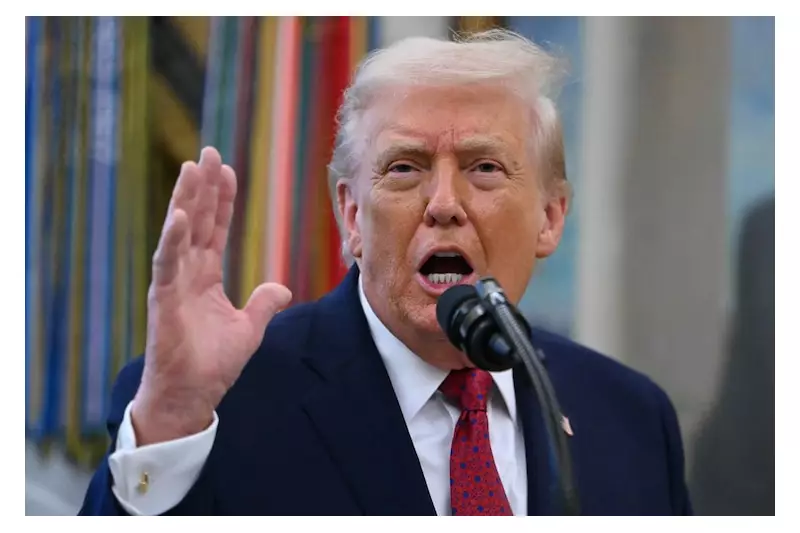
In a dramatic escalation of tensions, former US President Donald Trump has declared a comprehensive maritime blockade against Venezuela, demanding the South American nation return what he describes as stolen oil, land, and other assets to the United States.
Trump's Blockade Declaration and Demands
In a lengthy post on his social media platform on Tuesday night, Trump announced "A TOTAL AND COMPLETE BLOCKADE OF ALL SANCTIONED OIL TANKERS" entering or leaving Venezuelan waters. He framed this action as a response to the theft of American assets, though he did not provide immediate specifics on the alleged theft.
"Venezuela is completely surrounded by the largest Armada ever assembled in the History of South America," Trump wrote. He warned that the military presence would grow, promising a shock "like nothing they have ever seen before" until Venezuela returns "all of the Oil, Land, and other Assets that they previously stole from us."
Historical Context and Venezuelan Response
The reference to stolen assets is believed to be linked to the nationalization of oil fields under former Venezuelan leader Hugo Chávez in 2007, which led to the expropriation of assets from some American oil companies. The current Venezuelan government, led by President Nicolás Maduro, reacted swiftly and harshly to Trump's declaration.
In an official statement, the Venezuelan government condemned Trump's post as a "reckless and serious threat" that violates international law, principles of free trade, and freedom of navigation. They accused the US President of aiming to "steal the wealth that belongs to our homeland" through an irrational naval military blockade.
Military Reality and Recent Actions
While the US currently has approximately 11 warships in the Caribbean—its largest deployment in decades—military analysts suggest this force is insufficient to enforce a traditional, airtight blockade of Venezuela's extensive coastline. The move appears focused on disrupting the sanctioned oil trade.
Data from Tanker Trackers indicates over a dozen sanctioned tankers are currently in Venezuelan waters, part of a fleet of about 30 ships that help move the country's oil. This follows a recent US seizure of a sanctioned oil tanker off Venezuela's coast. US officials claimed that vessel was part of an illicit network supporting foreign terrorist organizations and was transporting oil between Venezuela and Iran.
In his social media post, Trump further intensified his rhetoric by labeling Maduro's government a "Hostile Regime" and a "FOREIGN TERRORIST ORGANIZATION," accusing it of using oil revenue to finance drug trafficking, terrorism, and human trafficking. This declaration follows an unprecedented move last month where Trump formally designated the Venezuelan regime as a terrorist organization.
The announcement also comes after remarks attributed to White House Chief of Staff Susie Wiles, who was quoted saying Trump "wants to keep on blowing boats up until Maduro cries uncle." Separately, since September, the US military has conducted dozens of strikes on vessels allegedly carrying drugs, which the administration links to its broader campaign against narcotics flowing into the United States.




