
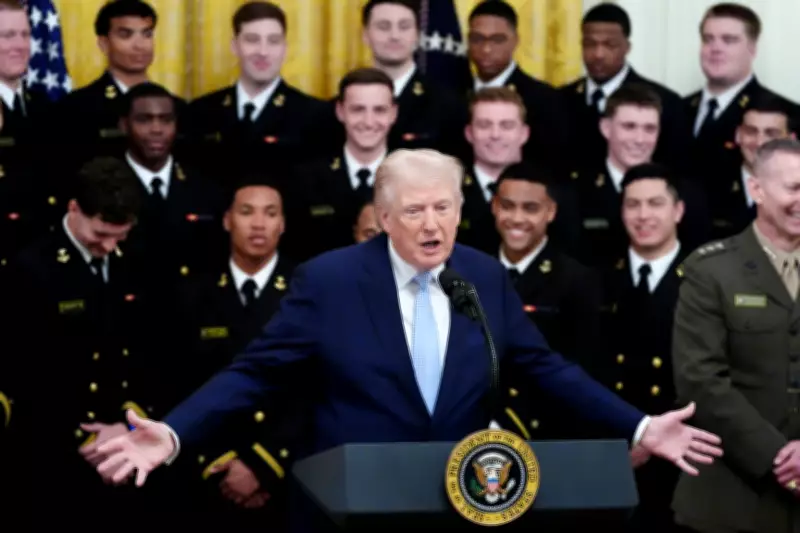
Trump's Scathing Attack on NATO Allies Over Hormuz Crisis
Former United States President Donald Trump has unleashed a fresh verbal assault on NATO allies, labeling them as "cowards" and "paper tigers" in the context of the escalating Strait of Hormuz crisis. This inflammatory rhetoric comes as Iran continues to disrupt shipping through this critical maritime corridor, which is responsible for transporting approximately 20% of the world's oil supply.
Criticism of Allied Inaction
Trump's remarks sharply criticize allied nations for their failure to support efforts aimed at securing the vital Strait of Hormuz route. He pointed out the irony that these same allies have been vocal in complaining about rising global oil prices, yet have not contributed meaningfully to resolving the security threats that are driving those increases. The former president argued that reopening the strait would constitute a relatively straightforward military operation, accusing NATO partners of over-relying on US intervention without offering substantial assistance.
Iran's Defiant Stance and Regional Escalation
Simultaneously, Iran's leadership has issued defiant rhetoric in response to the growing tensions. Mojtaba Khamenei, the son of the late Supreme Leader, reportedly released a statement urging Iran to disregard the "security" of its enemies as the conflict intensifies. The situation has deteriorated further due to continued military exchanges involving Iran, the United States, and Israel, with attacks targeting key energy infrastructure such as the South Pars gas field. These developments have not only driven up global energy prices but have also heightened fears of a prolonged and destabilizing regional conflict.
International Responses and Strategic Considerations
While the United Kingdom and European nations, including France and Germany, have signaled a willingness to support efforts to secure maritime routes, there are currently no confirmed plans to deploy naval escorts to the region. In contrast, reports suggest that the United States is considering more aggressive options, such as potential actions targeting Iran's key oil infrastructure, including Kharg Island. Analysts warn that such moves could significantly escalate the conflict, posing greater risks to global stability.
Despite the rising tensions, the UK government has indicated that it does not intend to be drawn into a wider war, even as it continues to coordinate with allies on security planning. The ongoing crisis underscores the strategic importance of the Strait of Hormuz and the broader risks to global energy markets as geopolitical tensions in the Middle East continue to escalate, highlighting the complex interplay between international diplomacy, military strategy, and economic security.




