
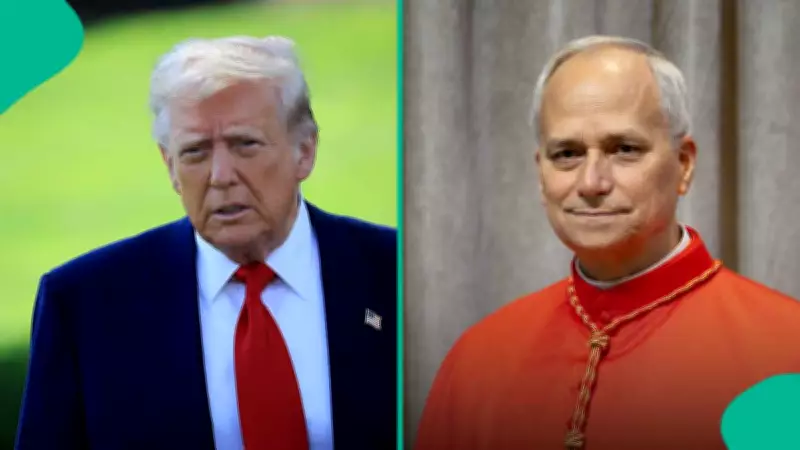
Trump Escalates Feud with Pope Leo XIV Over Iran War Stance
United States President Donald Trump has launched a sharp and public verbal assault on Pope Leo XIV, significantly deepening the diplomatic tensions between the White House and the Vatican regarding the ongoing military conflict involving Iran. This rare public clash between two of the world's most powerful and influential figures centers on profound disagreements about the justification, morality, and strategic direction of the war.
War Tensions Fuel Unprecedented Public Dispute
President Trump leveled his criticism against the pontiff during a flight back to Washington D.C. and later reiterated his forceful stance while addressing reporters on the ground. He openly questioned Pope Leo XIV's leadership capabilities and political viewpoints, making his profound dissatisfaction with recent official comments emanating from the Vatican abundantly clear.
"I'm not a fan of Pope Leo," Trump declared emphatically, adding that he did not believe the pope was "doing a very good job" in his role. This direct criticism was specifically triggered by remarks made by Pope Leo suggesting that a "delusion of omnipotence" was a primary driving force behind the escalating conflict involving the United States and its allied nations. Although the pope did not mention President Trump by name, his comments were widely interpreted across global diplomatic circles as a pointed rebuke of the current administration's hawkish stance and strategic approach to the war.
Trump's Forceful Social Media Rebuttal
Responding with characteristic vigor on his social media platform, President Trump accused Pope Leo XIV of maintaining weak and ineffective positions on critical issues such as international crime and foreign policy doctrine. He also categorically rejected any suggestion or implication that Iran should be permitted to develop or possess nuclear weapons capabilities.
"Pope Leo is WEAK on Crime, and terrible for Foreign Policy," Trump wrote in his post, underscoring his disapproval. This broader criticism extends well beyond the immediate context of the Iran conflict, touching upon fundamental philosophical and strategic differences between the U.S. administration and the Vatican's diplomatic corps.
Broader Implications of the Diplomatic Rift
The public spat represents a significant deterioration in relations between the American presidency and the Holy See, institutions that have historically maintained a complex but generally respectful dialogue. Analysts note that such open confrontation is highly unusual and could have lasting repercussions for:
- International coalition-building efforts regarding Iran
- Global perceptions of moral authority in conflict resolution
- Diplomatic channels between Western powers and religious institutions
- Public opinion among Catholic constituencies worldwide
The timing of this dispute is particularly sensitive, given the ongoing military deadlock and recent strategic moves, including Trump's earlier order for the U.S. Navy to block the Strait of Hormuz following failed negotiations with Iranian leadership. As both figures maintain their contrasting positions, the international community watches closely to see whether this war of words will translate into further policy divisions or if diplomatic backchannels can eventually facilitate a reconciliation.




