
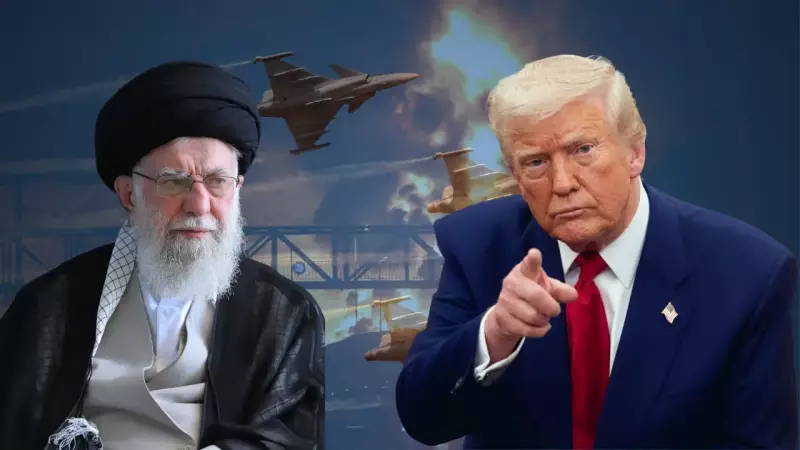
In a dramatic development, United States President Donald Trump has stated that Iran's leadership has reached out to him seeking negotiations. This comes amidst a severe crackdown on nationwide protests, with rights groups warning a "massacre" is unfolding and the death toll potentially reaching into the hundreds, or even thousands.
Protests Evolve into Direct Challenge to Theocracy
For two weeks, Iran has been rocked by widespread demonstrations that initially erupted over soaring living costs. The unrest has since transformed into one of the most serious direct challenges to the country's theocratic system, established after the 1979 revolution. Despite a government-imposed internet blackout, videos and reports have continued to emerge, showing large demonstrations in Tehran and other cities.
Speaking to reporters aboard Air Force One on Sunday, President Trump revealed the contact from Tehran. "The leaders of Iran called yesterday," Trump said, adding that "a meeting is being set up… They want to negotiate." However, he issued a stark warning, stating, "we may have to act before a meeting," reiterating his earlier threats of possible US military intervention if the killing of protesters continues.
Rights Groups Detail Escalating Violence and Death Toll
The scale of the government's response appears brutal. The US-based Center for Human Rights in Iran says it has received credible eyewitness accounts suggesting hundreds of protesters have been killed during the internet shutdown. Norway-based Iran Human Rights has confirmed at least 192 deaths but warns the true figure is likely far higher, with unverified reports indicating several hundred to possibly more than 2,000 fatalities. The group also estimates over 2,600 protesters have been arrested.
Disturbing footage circulating online, geolocated to the Kahrizak area south of Tehran, showed dozens of bodies wrapped in black bags outside a morgue, as grieving relatives searched for loved ones. An AFP journalist in Tehran described a city in a state of near paralysis, with soaring prices, shuttered shops, and a heavy security presence.
Internal Unrest and External Threats
The protests pose a significant challenge to 86-year-old Supreme Leader Ayatollah Ali Khamenei. In response, the Iranian government has declared three days of national mourning for "martyrs," including security forces. President Masoud Pezeshkian urged citizens to join a "national resistance march" against the violence, while state TV broadcast images of burning buildings and funerals for security personnel, attempting to project calm simultaneously.
Reacting to Trump's threats, Iran's parliament speaker, Mohammad Bagher Ghalibaf, warned that Iran would retaliate, describing US military forces and shipping as "legitimate targets."
Adding another layer to the crisis, Reza Pahlavi, the US-based son of Iran's former shah, said he was prepared to return to Iran to lead a democratic transition. He called on security forces to side with protesters and urged demonstrators abroad to replace Iranian embassy flags with the pre-revolution tricolour, a symbol seen at global rallies, including in London where the embassy flag was briefly swapped.




