
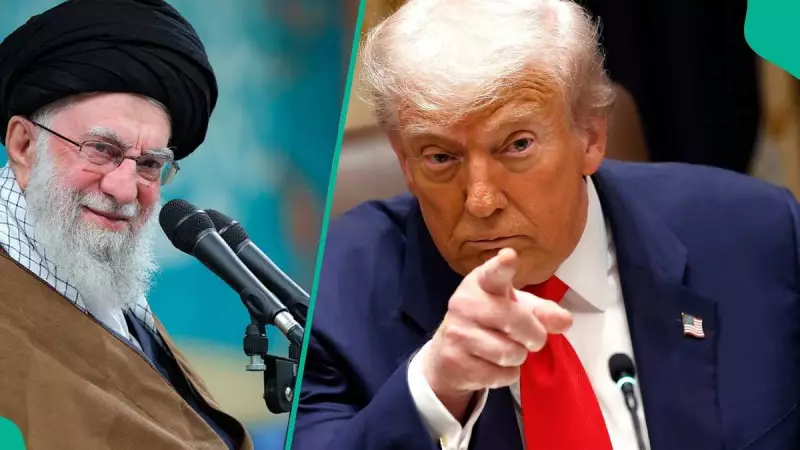
United States President Donald Trump has issued a stark warning to Iranian authorities, stating that the American military is weighing "very strong options" in response to the escalating anti-government protests that have rocked the nation for three weeks. The unrest has reportedly led to hundreds of fatalities and thousands of arrests.
Trump's Ultimatum and Potential Military Strikes
Speaking on Sunday, January 11, 2026, President Trump revealed that Iranian officials had reached out to him to initiate negotiations. However, he delivered a blunt warning that Washington might not wait for diplomatic talks to commence. "They want to negotiate, but we may have to act before a meeting," Trump declared. He added that Iranian leaders were, in his view, "tired of being beat up by the United States."
A senior US official later confirmed that President Trump had been briefed on potential military strike options against Iran. Other measures under serious consideration include cyber operations, increased economic sanctions, and bolstering support for anti-government messaging online.
Mounting Death Toll and Government Crackdown
The scale of the violence within Iran is becoming increasingly clear despite severe restrictions on information. The US-based Human Rights Activist News Agency (HRANA) has verified the deaths of nearly 500 protesters and 48 members of Iran’s security forces since the demonstrations erupted in late December. Sources speaking to the BBC suggest the actual death toll could be significantly higher.
Furthermore, HRANA reports that at least 10,600 people have been detained during the unrest, indicating a widening and severe government crackdown. Verified footage and eyewitness accounts describe graphic scenes, including rows of body bags in morgues and streets described as "full of blood." Witnesses report bodies being removed in trucks and buried hurriedly before dawn to prevent identification.
Iran's Response and Internet Blackout
Iranian authorities have dismissed the protesters as "a bunch of vandals" and accused the United States and Israel of orchestrating the unrest. The government has called for three days of mourning for security forces it labels "martyrs" and urged its supporters to join pro-government rallies on Monday, January 12.
Supreme Leader Ayatollah Ali Khamenei accused the protesters of seeking to "please" President Trump. Meanwhile, Iran’s attorney general warned that demonstrators could be treated as "enemies of God," a charge that carries the death penalty. The protests, initially fueled by anger over the collapsing value of Iran's currency, have evolved into a broader challenge to the regime's legitimacy, representing the largest such demonstrations since the 2022 uprising.
In a move to stifle communication and organization, Iran has imposed a near-total internet blackout since Thursday, January 8. This has made verifying events extremely difficult. President Trump stated he plans to speak with Elon Musk about potentially using SpaceX's Starlink satellite service to restore internet access for Iranians, praising Musk as "very good at that kind of thing."
The situation remains highly volatile, with Iran’s parliament speaker warning the US against any "miscalculation," stating that an American attack would make US and Israeli assets in the region legitimate targets. As security forces increase their presence, the world watches to see if Trump's warnings will translate into action.




