
In a dramatic escalation of pressure against the government of Nicolas Maduro, United States President Donald Trump has declared a full naval blockade targeting oil tankers linked to Venezuela. The announcement, made on Tuesday via his Truth Social platform, signals a significant hardening of US policy aimed at crippling the South American nation's primary economic lifeline.
Military Buildup and First Seizure Set the Stage
The blockade order follows weeks of an expanding US military presence in the Caribbean Sea. Washington has justified this deployment as part of a regional anti-drug trafficking operation. However, officials in Caracas have consistently labelled it a thinly veiled campaign to overthrow the leftist administration of President Nicolas Maduro, whom the US and numerous other countries consider illegitimate.
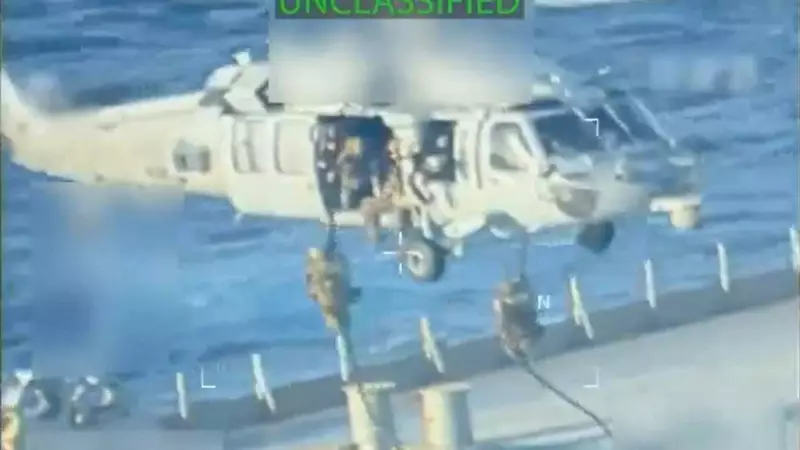
The campaign took a tangible turn on December 10, when US forces seized the oil tanker named 'Skipper'. The vessel had departed from Venezuela and was reportedly en route to Cuba. Following this action, the Trump administration imposed sanctions on several other vessels, setting the stage for the broader blockade.
Trump's Demands and Accusations
In his social media statement, President Trump was unequivocal in his demands. He declared, "A TOTAL AND COMPLETE BLOCKADE OF ALL SANCTIONED OIL TANKERS going into, and out of, Venezuela." He further warned that the substantial US naval armada, which includes the world's largest aircraft carrier, "will only get bigger" until Venezuela returns what he described as stolen assets.
Trump claimed these assets include "all of the Oil, Land, and other Assets that they previously stole from us." While he did not provide specific details, this appears to reference the nationalization of Venezuela's oil industry in the 1970s and later policies under former President Hugo Chavez that forced foreign companies to cede control to the state-owned PDVSA.
The US President levelled severe accusations against the Maduro regime, stating it uses "Oil from these stolen Oil Fields to finance themselves, Drug Terrorism, Human Trafficking, Murder, and Kidnapping." Maduro has repeatedly countered that the true US objective is to orchestrate his removal and seize Venezuela's vast oil reserves, estimated by OPEC to be roughly 303 billion barrels—the largest in the world.
Potential for Deepening Economic Crisis in Venezuela
Analysts warn that an effective blockade could devastate Venezuela's already fragile economy. The country has managed to circumvent existing US oil sanctions for years by selling crude at a discount on the black market, primarily to China. A complete halt to exports would cut off a critical source of foreign currency.
Elias Ferrer of the Venezuelan advisory firm Orinoco Research explained the potential consequences to AFP. He stated that without oil exports, the foreign exchange market and the country's ability to import goods would be severely affected. This could trigger not just a deeper recession, but also "shortages of food and medicine, because we wouldn't be able to import." Such a scenario would create immense political pressure on the Maduro government from a population already enduring severe hardship.
The move represents the latest in a series of confrontational actions by the Trump administration in its final weeks, combining military, economic, and diplomatic pressure in a bid to force political change in Caracas. The international community is now watching closely to see how Venezuela and its allies respond to this unprecedented naval blockade.




