
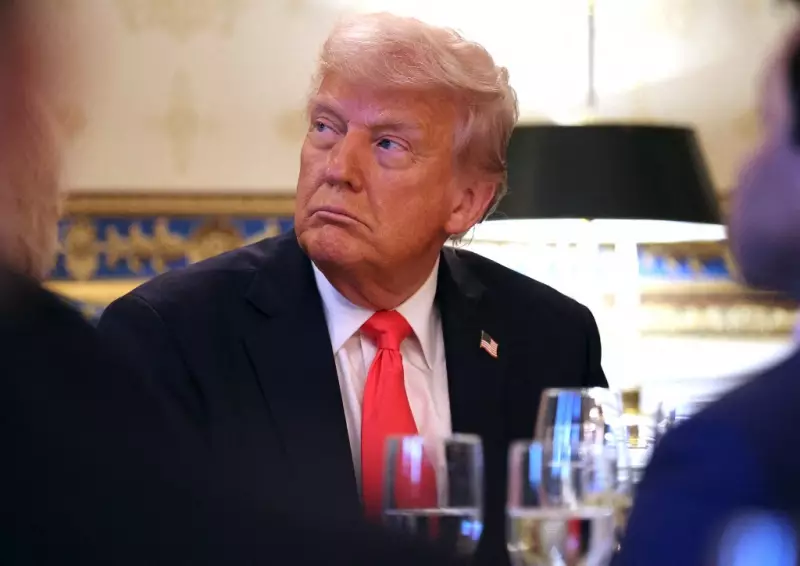
In a high-profile diplomatic move, United States President Donald Trump convened the leaders of Rwanda and the Democratic Republic of Congo at the White House on Thursday, December 4, 2025, to witness the signing of a new peace accord. The event, however, was overshadowed by reports of intense fighting continuing in the conflict-torn eastern regions of the DRC even as the ceremony took place.
A Ceremony in Washington, Conflict in Congo
President Trump welcomed Rwandan President Paul Kagame and Congolese President Felix Tshisekedi to the White House. The leaders then proceeded to the newly renamed Donald J. Trump Institute of Peace in Washington to formalize the agreement. This meeting comes more than five months after the countries' foreign ministers met with Trump and announced a previous deal aimed at ending the long-running conflict.
Trump has publicly hailed this agreement as another foreign policy triumph, claiming it is among eight wars he has ended since returning to office in January 2025. The US president has not hidden his ambition to win the Nobel Peace Prize, a desire underscored by the renaming of the peace institute hosting the signing.
Violence Shadows the Signing
Contradicting the peaceful imagery from Washington, the reality on the ground in the Democratic Republic of Congo remained starkly violent. On the very day of the signing, intense fighting raged in eastern DRC. The M23 armed group, which United Nations reports have linked to Rwandan support, has been gaining significant ground against forces loyal to the Kinshasa government in recent weeks.
An AFP journalist reported weapon fire on the outskirts of Kamanyola, an M23-controlled town in South Kivu province. "Many houses have been bombed, and there are many dead," said Rene Chubaka Kalembire, an official in the town of Kaziba. Local sources also reported a massive build-up of M23 reinforcements, including armored cars, in the South Kivu highlands, a strategic move that could allow them to encircle the major town of Uvira.
This violence continues despite a ceasefire pledge made in June following mediation by Qatar, a US partner. Both the M23—which denies ties to Rwanda—and the Congolese government have since accused each other of violating that truce.
Strategic Interests and Demands
The US-brokered agreement is not solely focused on peace. A key driver for Washington is gaining access to the DRC's vast reserves of critical minerals, essential for modern technologies like electric vehicle batteries. The DRC holds the majority of the world's cobalt and significant copper deposits, resources that Trump has indicated he wants to secure for the US instead of China.
The Congolese government stated the deal includes a peace framework, regional economic integration, and a "strategic partnership" on natural resources. However, Kinshasa insists that tangible peace must be established before moving to the economic development phase.
For its part, Rwanda has made the cessation of its "defensive measures" contingent on the DRC government neutralizing the FDLR (Democratic Forces for the Liberation of Rwanda), a Hutu armed group linked to the 1994 genocide. The complex, decades-old conflict has claimed hundreds of thousands of lives, presenting a formidable challenge to any paper agreement signed thousands of miles away.
As fighter jets reportedly bombarded areas around Kaziba on Thursday morning and explosions were heard near border posts, the "historic peace and economic agreement" proclaimed by the White House faced its first, immediate test against the enduring reality of war.




