
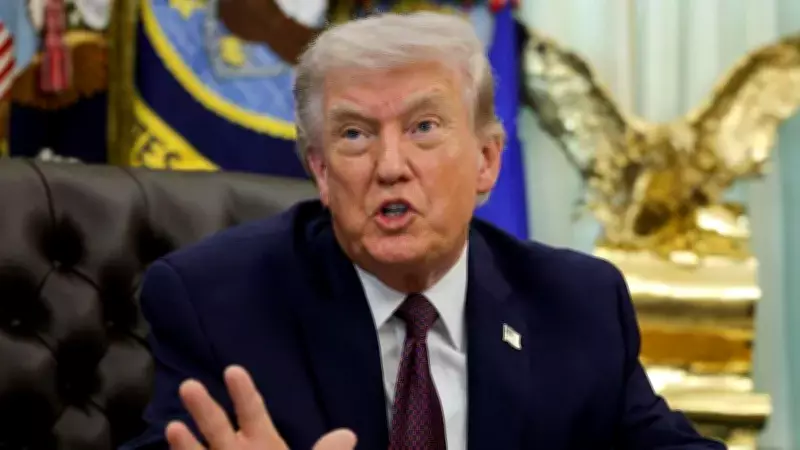
Trump Declares US Could 'Finish the Job' in Iran Within Weeks, Rubio Issues Warning on Negotiations
US President Donald Trump has asserted that American military operations in Iran could be completed within a timeframe of "two or three weeks," regardless of whether a negotiated agreement is reached between the two nations. In a recent statement, Trump emphasized that the United States has largely achieved its primary objectives in the conflict, notably weakening Iran's capacity to develop nuclear weapons, and is now in the process of "finishing the job."
Trump's Remarks on Timeline and Deal Possibility
Trump detailed that US forces might withdraw from Iran soon after ensuring Tehran no longer poses a nuclear threat. "We're finishing the job, and I think within maybe two weeks, maybe a couple of days longer, to do the job," he said. He added that while a potential deal between Washington and Tehran remains on the table, it is not a prerequisite for ending the hostilities. "It's possible that we'll have a deal because they want to make a deal, but it doesn't matter if they come to the table or not," Trump remarked, underscoring a stance that prioritizes military objectives over diplomatic necessities.
Rubio's Comments and Iranian Response
US Secretary of State Marco Rubio echoed the sentiment that the war's conclusion may be imminent, confirming ongoing discussions and the possibility of a direct meeting between the sides. However, Rubio issued a stern warning, stating that the US would not tolerate what he described as "fake negotiations" aimed at stalling progress. On the Iranian front, President Masoud Pezeshkian expressed his country's willingness to end the war, provided certain conditions are met, including guarantees to prevent future aggression. Pezeshkian's comments followed a conversation with European Council President António Costa, where both leaders discussed the urgency of de-escalating tensions and pursuing diplomatic solutions.
Ongoing Hostilities and Regional Impact
Despite these diplomatic signals, hostilities have persisted across the region, highlighting the volatile nature of the conflict. US forces conducted strikes on underground military targets in Iran, while Israel reported attacking a facility it claimed was linked to chemical weapons production—an assertion Iran denied, maintaining the site was used for medical purposes. In Lebanon, heavy Israeli airstrikes targeted Beirut, aiming at senior figures of Hezbollah, the Iran-backed group involved in the conflict.
The Gulf region also faced continued threats, with Saudi Arabia intercepting drones, a tanker near Qatar reportedly struck by a missile, and attacks recorded in Bahrain and Kuwait. Notably, a fire outbreak occurred at Kuwait International Airport following drone strikes. Meanwhile, Israel reported detecting a fresh wave of projectiles launched from Iran toward its territory, underscoring the ongoing intensity and widespread impact of the conflict.




