
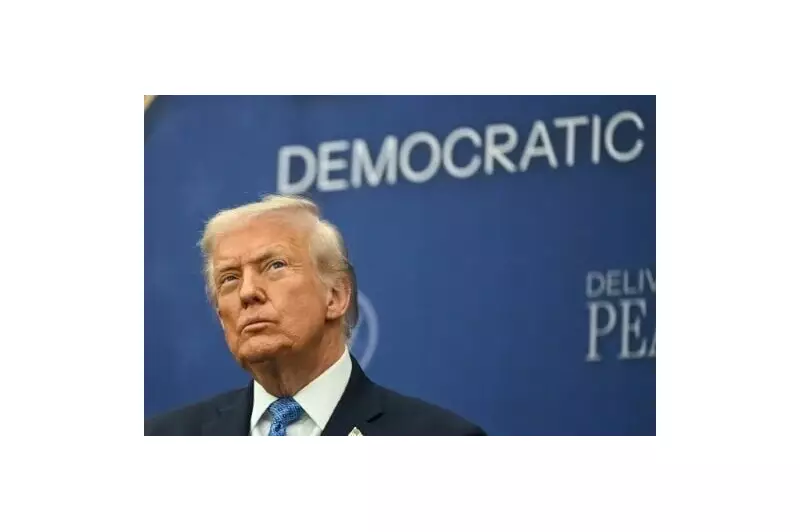
The White House has unveiled a comprehensive new blueprint for America's role in the world, marking a significant departure from decades of foreign policy tradition. President Donald Trump's 33-page National Security Strategy document, released recently, formally expands his "America First" doctrine into a concrete plan that redefines alliances and strategic priorities.
A "Trump Corollary" for the Western Hemisphere
The strategy calls for a major readjustment of US military presence closer to home, specifically in the Western Hemisphere. This shift is aimed squarely at countering illegal migration, international drug trafficking, and the growing influence of rival powers in the region. The plan advocates for a strengthened US Coast Guard and Navy and authorizes deployments to secure borders and combat cartels, explicitly mentioning the potential use of lethal force.
This approach is framed as a "Trump Corollary" to the historic Monroe Doctrine, asserting that unchallenged US dominance in the Americas is non-negotiable for national security. This follows controversial recent actions where US forces have destroyed multiple alleged drug boats in international waters, a move that has drawn legal scrutiny from experts and lawmakers.
A Confrontational Stance Towards Europe
Perhaps the most striking part of the document is its sharp tone towards traditional allies in Europe. The strategy warns of European "economic decline" and risks of "civilizational erasure," suggesting some NATO nations could become "majority non-European" in coming decades. It further accuses European governments of ignoring public desire for peace in Ukraine and blocking US-backed efforts to end the conflict.
The document states a core American interest is to negotiate a quick end to the war in Ukraine to stabilize economies and rebuild strategic stability with Russia. Going a step further, it explicitly encourages efforts to influence politics within Europe, calling for "cultivating resistance to Europe’s current trajectory." It argues Europe must "remain European" and scale back regulatory overreach. European Union officials have stated they are yet to review the document fully.
Managing China and Viewing Alliances as Tools
On China, the strategy outlines a dual-track approach: containing Beijing's global influence while maintaining economic cooperation and preserving the status quo around Taiwan. It emphasizes deterring conflict through military superiority while seeking "mutually advantageous" trade and reducing US economic dependence on China. The administration links this reset to its goal of growing the US economy from $30 trillion to $40 trillion in the next decade.
A recurring theme is the treatment of international alliances. The document frames them as tools for specific interests rather than permanent commitments. It reiterates the aim to prevent NATO's endless expansion, formalizing earlier criticism from Trump officials like Vice President JD Vance, who has called Europe's greatest threat an internal one. Overall, Trump's strategy is presented as an unconventional form of diplomacy, leveraging military and economic power to manage tensions between nuclear powers and prevent regional conflicts from escalating.




