
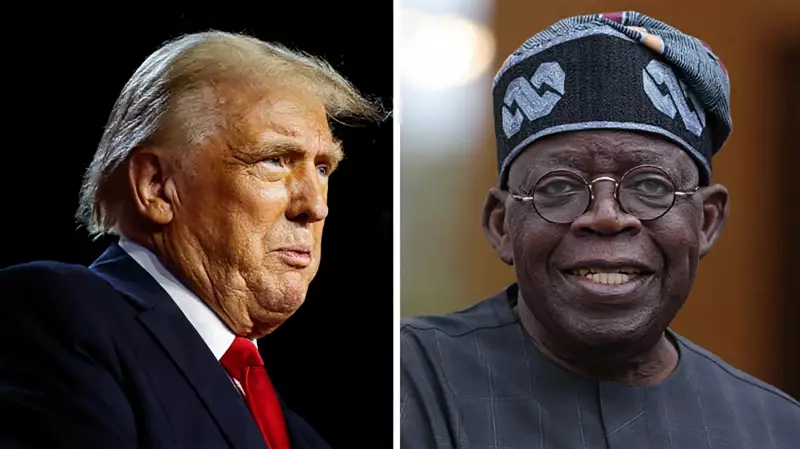
Fresh diplomatic unease has emerged between the United States and two key African nations, Nigeria and Somalia, following a series of controversial public statements made by US President Donald Trump. The remarks, touching on migration and governance, have put long-standing security and aid partnerships under strain, unfolding against a backdrop of increasingly complex US-Africa relations.
Nigeria's Cautious Stance on Security and Respect
In Nigeria, officials in Abuja have adopted a measured and cautious diplomatic posture in recent weeks. This comes in direct response to public comments and policy positions from President Trump that have addressed immigration, security cooperation, and governance across the African continent.
Nigerian authorities have consistently emphasized that any engagement with Washington must be firmly rooted in mutual respect. This principle is considered non-negotiable, especially concerning critical areas like counter-terrorism, trade, and migration matters.
While the Nigerian government has skillfully avoided a direct public confrontation, diplomats have confirmed that behind-the-scenes discussions with American counterparts are actively ongoing. These talks focus on vital security assistance and regional stability, with particular attention to the volatile situation in West Africa.
Nigeria remains a pivotal US partner in the fight against terrorism, leading operations against armed groups in the Lake Chad basin and north-western regions. Despite years of concerted military campaigns, violence in these areas persists, underscoring the importance of the bilateral security relationship.
Somalia Reacts to "Stinks" Comment and Migrant Remarks
The diplomatic spotlight shifted sharply to Somalia on Tuesday, 4 December 2025, after President Trump made incendiary comments during a cabinet meeting. He described the East African nation as a place that "stinks" and declared that the United States did not want Somali migrants.
These remarks followed a major fraud case in Minnesota, USA, where prosecutors allege losses of roughly $1 billion, largely through false billing linked to Somali Americans. Trump accused Somali migrants of ingratitude and claimed that in Somalia "they have nothing, they just run around killing each other."
The Somali federal government in Mogadishu has so far declined to issue an official response to the comments. Officials did not respond to requests for comment from news agencies, a silence that analysts interpret as a reflection of Somalia's profound dependence on American military and humanitarian support. This aid is crucial in the protracted battle against the Al-Shabaab militant group, which is linked to Al-Qaeda.
Divided Reactions on the Streets of Mogadishu
On the ground in Somalia's capital, however, public reaction was immediate and mixed. Daud Bare, a grocer in the Waberi district, expressed outrage: "It is not the first time that President Trump has spoken negatively about Somalia and the Somali people, but this time his offences are unacceptable. It is high time that the government breaks its silence."
Hassan Ali, a 23-year-old university student, labeled the remarks as simply "rude," pointing out that every country has faults. Others urged caution. University lecturer Mahdi Ibrahim warned, "If the federal government irritates Trump, he may not hesitate to withdraw US support as he did before."
NGO worker Nuradin Abdi called for introspection, stating, "If we want to change the negative global narrative, we must improve our system of governance."
Broader Implications for US-Africa Ties
President Trump's comments arrive as his administration continues to advocate for stricter immigration controls and a comprehensive reassessment of foreign aid commitments. These policy shifts have already impacted several African nations.
The situation highlights a central tension in contemporary US-Africa relations: strategic necessity versus diplomatic sensitivity. Both Nigeria and Somalia remain intricately tied to Washington for security and economic reasons, even as divisive public rhetoric tests the resilience of these partnerships. The unfolding scenario underscores the delicate balance African nations must strike between asserting national dignity and preserving essential international alliances.




