
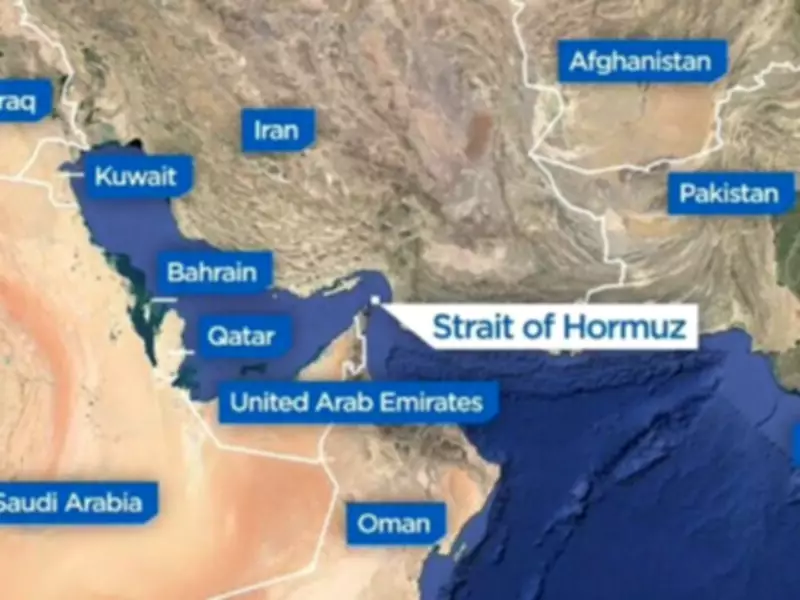
UAE Demands Strait of Hormuz Guarantee in Any US-Iran Agreement
The United Arab Emirates has firmly insisted that any agreement designed to resolve escalating tensions between the United States and Iran must include ironclad guarantees for free and uninterrupted passage through the strategically vital Strait of Hormuz. Emphasizing that this critical maritime corridor cannot be weaponized or used as leverage in broader geopolitical disputes, a senior UAE official outlined the nation's non-negotiable position.
Global Economic Priority, Not a Bargaining Chip
Anwar Gargash, a prominent diplomatic advisor, stated unequivocally that the security and stability of the Strait of Hormuz must be treated as a paramount global economic priority. He stressed it should never be reduced to a regional bargaining tool in negotiations. "Uninterrupted navigation through this channel must form a core, foundational element of any settlement or ceasefire," Gargash declared, highlighting the waterway's role in transporting roughly one-fifth of the world's daily oil and liquefied natural gas shipments.
While the UAE supports diplomatic efforts to end the conflict, Gargash warned against a superficial ceasefire that ignores deeper, unresolved issues. He specifically pointed to Iran's nuclear ambitions and its expanding missile and drone capabilities, arguing that failing to address these threats comprehensively could create an even more dangerous and unstable Middle East.
Escalation and Regional Impact
The current crisis erupted following a breakdown in nuclear negotiations, prompting the United States and Israel to launch strikes against Iranian targets. Iran retaliated with a series of missile and drone attacks aimed at Israel, U.S. military bases, and critical infrastructure across the Gulf region, including major ports and energy facilities. These hostilities have already disrupted maritime traffic, contributing to rising global energy prices and security concerns.
Gargash revealed that among Gulf nations, the UAE has endured some of the heaviest attacks. Despite this pressure, he asserted the country has demonstrated remarkable resilience. "Our economy remains fundamentally strong," he noted, "but recovery from this ongoing crisis will undoubtedly require significant and sustained effort."
Strategic Consequences and Warnings
The UAE official issued a stark warning about the potential long-term consequences of Iran's strategy. He suggested that Tehran's actions, which regional analysts view as an attempt to raise the conflict's cost for U.S. allies by targeting energy infrastructure, could backfire. Instead of pressuring Gulf states to push for a cessation of hostilities, it may actually deepen security cooperation between these nations and Washington.
- This could lead to a strengthened U.S. military footprint in the region.
- It may also increase Israel's strategic influence in Gulf affairs.
- The UAE stands prepared to support international efforts, particularly those led by the United States, to secure shipping routes in the Strait if the situation demands it.
Gargash reflected on the diplomatic history, noting that Gulf nations have previously sought to maintain a careful balance and avoid direct confrontation with Iran. However, the current escalation has made that position increasingly untenable. "While the UAE does not seek hostility, rebuilding trust remains an immense challenge under the current Iranian leadership," he stated.
In conclusion, Gargash framed the crisis as a stark reminder of the urgent need for durable, long-term stability measures. He cautioned that allowing these tensions to fester unresolved would not only further destabilize the Middle East but also pose a continuous threat to global energy security, with repercussions felt far beyond the region's borders.




