
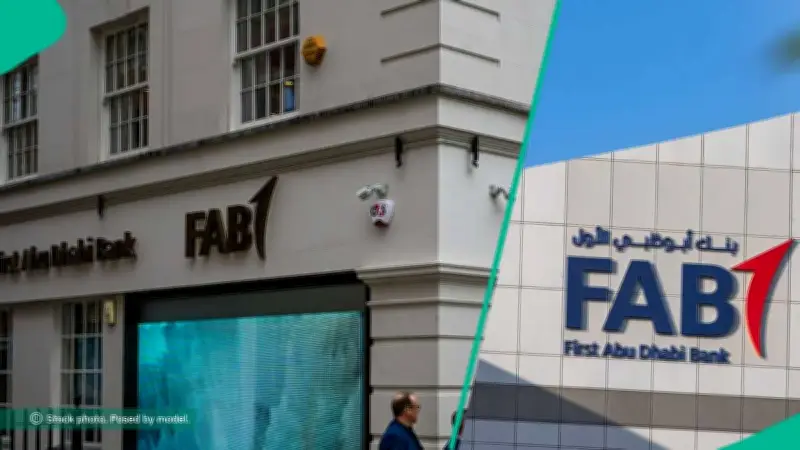
First Abu Dhabi Bank Confirms Plans for South African Licence
First Abu Dhabi Bank (FAB), the largest lender in the United Arab Emirates, has confirmed plans to apply for a banking licence in South Africa, marking its biggest expansion move on the continent yet. The announcement follows a successful trademark dispute against FirstRand, South Africa's largest bank by market capitalisation, at the country's Supreme Court of Appeal.
In February 2026, FAB opened a representative office in Nigeria, its first presence in West Africa. The bank already operates in Egypt and Libya, and a South African licence would give it coverage spanning North, West, and Southern Africa.
Legal Battle Clears Key Hurdle
FirstRand had challenged FAB's trademark application, arguing that the "FAB" name bore too close a resemblance to FNB, the retail banking brand operated under the FirstRand group. The Supreme Court of Appeal dismissed the objection, ruling that there was no basis to doubt FAB would satisfy all regulatory requirements, including securing a banking licence, once its trademarks are registered.
FAB argued before the court that it chose to secure trademark protection ahead of a licence application for practical financial reasons, describing any other sequence as "putting the cart before the horse." The ruling does not grant an automatic banking licence but removes a significant legal obstacle.
FAB's Financial Firepower
With total assets of approximately $406 billion, FAB is larger than Standard Bank and FirstRand combined, giving it considerable firepower to compete in markets where it chooses to operate. The Gulf lender's expansion comes as European banks scale back their African operations.
HSBC recently completed a full withdrawal from South Africa, having sold parts of its local business to South African banks. BNP Paribas, Barclays, and Standard Chartered have each reduced their footprint across the continent over the past several years.
Strategic Timing Amid European Retreat
The retreat of European institutions has opened space for Gulf-based lenders, whose governments have deepened trade and investment ties with African countries. FAB's expansion strategy appears designed to capture business in trade finance, infrastructure funding, energy, and corporate banking, sectors where demand continues to grow across the continent.
According to BusinessDay South Africa, FAB's move into South Africa is a concrete and progressing ambition, with the trademark ruling signalling that regulatory approval is likely to follow.
Nigeria-UAE Trade Agreement
Earlier, Nigeria and the UAE signed a Comprehensive Economic Partnership Agreement (CEPA) aimed at strengthening trade and investment between the two countries. Jumoke Oduwole, Minister of Industry, Trade and Investment, said the agreement focuses on improving market access for Nigerian products and services, attracting quality investment, and supporting economic diversification under President Bola Ahmed Tinubu's Renewed Hope Agenda.




