
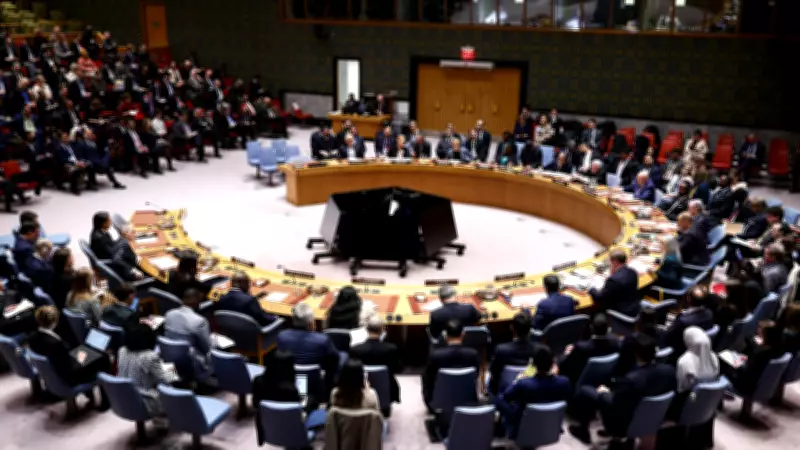
UN Security Council to Vote on Strait of Hormuz Resolution Amid Escalating Tensions
The United Nations Security Council is scheduled to hold a critical vote on a revised resolution concerning the blockade of the Strait of Hormuz, a vital global maritime chokepoint. However, the final outcome remains highly uncertain due to substantial modifications made to the original proposal in response to diplomatic pressures.
Timing and Context of the Vote
The vote is expected to occur at 11:00 a.m. (1500 GMT), just hours before a deadline issued by former U.S. President Donald Trump for Iran to reach an agreement or potentially face military action targeting key infrastructure. This timing underscores the urgency of the situation as international tensions continue to mount.
Key Changes in the Revised Draft Resolution
The current draft resolution has been significantly diluted compared to earlier versions. Notably, it no longer includes any authorization for the use of force, even in a defensive capacity. This change reflects concerted efforts to avoid rejection by veto-wielding permanent members of the Security Council, who have expressed strong opposition to military intervention.
The initiative was originally championed by Bahrain, with support from the United States and other Gulf nations. They sought a mandate that could permit military intervention to reopen the strategic waterway. However, resistance from permanent members including France, Russia, and China necessitated multiple revisions and delays, leading to the current compromise text.
Content of the Revised Resolution
The revised text instead encourages coordinated, defensive efforts by states to ensure safe navigation through the Strait of Hormuz. This includes provisions for escorting commercial vessels, rather than explicitly authorizing the use of force. Additionally, the resolution demands that Iran immediately halt attacks on merchant ships and cease any actions that obstruct transit through the Strait.
It also calls for an end to attacks on civilian infrastructure, including water, oil, and gas facilities, which have been targeted in recent conflicts. The vote comes amid escalating tensions following Iran’s blockade of the strait after military actions by the United States and Israel on February 28, actions that have disrupted global energy markets and heightened geopolitical risks.
International Reactions and Analysis
French Ambassador Jerome Bonnafont has indicated support for a "defensive response" framework, aligning with the resolution's emphasis on non-military measures. Analysts note that the resolution represents a delicate compromise between competing global interests, balancing the need for security with the avoidance of further escalation.
According to Daniel Forti of the International Crisis Group, the resolution may still achieve a diplomatic rebuke of Iran’s actions, even without authorizing military force. This could serve as a symbolic gesture of international condemnation while maintaining a pathway for peaceful resolution.
Potential Veto and Historical Context
Despite the revisions, the possibility of a veto from Russia or China remains a significant concern. Both nations have shown alignment with Iran and have expressed concerns about escalating the conflict through UN-backed measures. Historically, UN Security Council authorizations for the use of force are rare, with notable precedents including the coalition response during the 1990 Gulf War and NATO’s intervention in Libya in 2011.
This vote highlights the complex dynamics of international diplomacy, where strategic interests often clash with the pursuit of global stability. The outcome will likely influence future approaches to maritime security and conflict resolution in volatile regions.




