
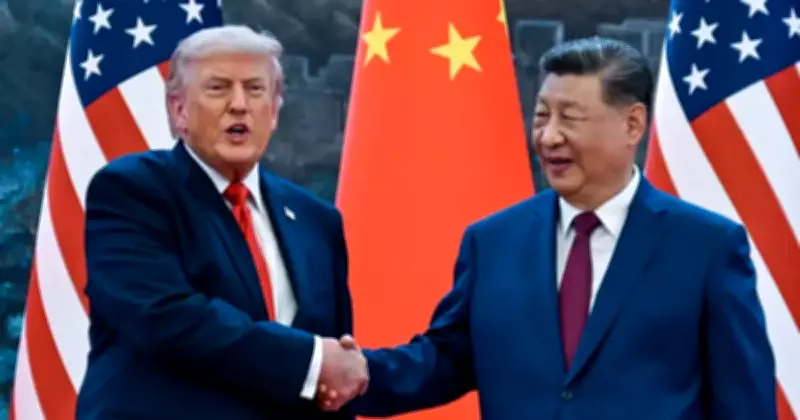
The White House has announced that the United States and China have reached a consensus that Iran must never be allowed to possess nuclear weapons. This agreement came during a historic meeting between US President Donald Trump and Chinese President Xi Jinping.
Key Agreements Reached
According to an official statement from the White House, President Trump and President Xi agreed on several critical issues concerning the ongoing conflict between America and Iran. Both leaders emphasized that the Strait of Hormuz must be reopened unconditionally to ensure the free flow of energy. President Xi also expressed China's opposition to the militarization of the Strait and any attempts to impose tolls for its use. Additionally, Xi showed interest in purchasing more American oil to reduce China's dependence on the Strait in the future.
Nuclear Weapons Prohibition
The two sides firmly agreed that Iran can never acquire a nuclear weapon. This marks a significant alignment between the US and China, which had previously been divided on the Iran issue. The agreement was shared via a post on the official White House X account, stating: "Both countries agreed that Iran can never have a nuclear weapon."
Invitation to Visit the US
President Trump extended an invitation to President Xi to visit the United States later in 2026. During a state banquet, Trump thanked Xi for the hospitality and spoke optimistically about the long-term relationship between the two nations. The invitation was formally made during a toast, with Trump inviting Xi and First Lady Madam Peng to the White House for an official visit in September.
Historic Context
Trump's visit to China is historic, being the first in a decade amid ongoing trade conflicts between the two nations. The agreement on the Strait of Hormuz and opposition to Iran's nuclear program represents a major milestone in US-China partnership. In March 2026, the US Navy seized an Iranian-flagged vessel en route from Beijing, reportedly carrying chemicals used in rocket production, which escalated tensions. China warned the US not to interfere in its affairs.
Regional Tensions
Since the US and Israel initiated military action against Iran, regional tensions have escalated. Iran blocked free passage in the Strait of Hormuz, causing a global crude oil shortage and price increases. The US led efforts to reopen the Strait and imposed a blockade to prevent Iran from selling crude oil and receiving military shipments. In response, Iran banned US and Israel-related vessels from the Strait and demanded tolls from other vessels.
Diplomatic Efforts
The US and Iran have been engaged in months-long dialogue to resolve the dispute, facilitated by Pakistan. Vice President JD Vance leads the US side, while President Masoud Pezeshkian represents Iran. Both nations have expressed readiness to reach a deal but remain divided on key details. The US demands that Iran hand over all weaponized nuclear enrichment facilities, while Iran prefers to transfer them to a third party like Russia. Iran also seeks tens of billions of dollars in damages for the bombing of its key infrastructures.
Trade Deals and Accompanying CEOs
Trump's two-day visit to China is expected to generate tens of billions in trade deals. The President was accompanied by CEOs of America's most valuable companies, including Elon Musk (Tesla and SpaceX), Tim Cook (Apple), Larry Fink (BlackRock), Brian Sikes (Cargill), Kelly Ortberg (Boeing), Jensen Huang (Nvidia), Jane Fraser (Citi), David Solomon (Goldman Sachs), Ryan McInerney (Visa), and Dina Powell McCormick (Meta), among others.
The agreement between the US and China marks a pivotal moment in international relations, with both superpowers united in their stance against Iran's nuclear ambitions and committed to maintaining free navigation in the Strait of Hormuz.




