
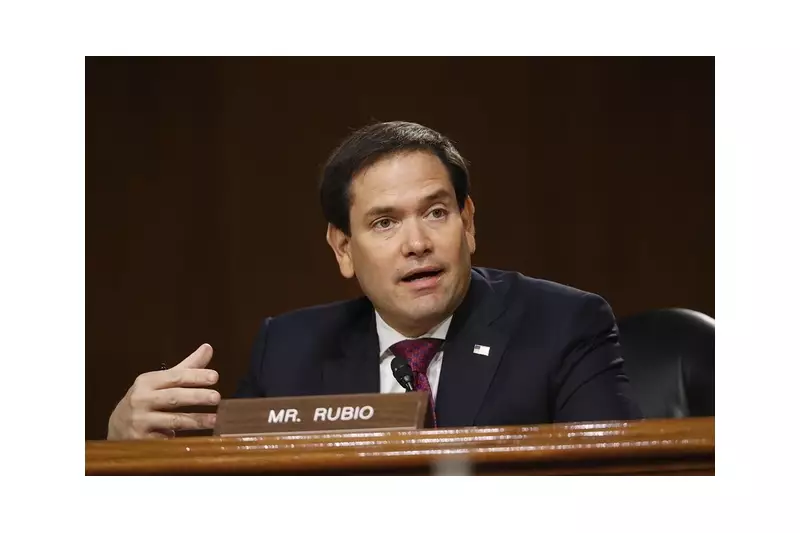
The United States government has significantly escalated diplomatic pressure on Nigeria, announcing imminent visa restrictions for officials implicated in violations of religious freedom. This decisive action, declared by U.S. Secretary of State Marco Rubio, comes amidst alarming calls from a Washington lobbyist for America to treat Nigeria with the same lack of sovereign respect accorded to Venezuela.
Visa Bans and Sovereign Disrespect
In a statement released on the social media platform X, Secretary of State Marco Rubio outlined the new punitive measures. He stated that the U.S. Department of State would restrict visas for individuals who "knowingly direct, authorise, fund, support, or carry out violations of religious freedom." Rubio framed this as a response to atrocities and violence against Christians in Nigeria and elsewhere.
Simultaneously, a Washington-based lobbyist, Elias Gerasoulis, posted a controversial view on X, asserting that "Nigeria doesn't warrant the respect of a sovereign nation." He urged the U.S. to approach Nigeria in the same manner it deals with Venezuela, a country facing severe international sanctions.
Trump's Directive and Congressional Hearings
This development follows a series of aggressive statements and actions from U.S. political figures. In November, former President Donald Trump announced on his Truth Social platform that he had directed the Pentagon to prepare for a potential military invasion of Nigeria. His stated goal was to halt the persecution and massacre of Christians, threatening to stop all aid and potentially enter the country "guns-a-blazing."
The U.S. position solidified after Nigeria's redesignation as a "Country of Particular Concern" (CPC). This was based on claims that the Nigerian government failed to curb attacks on citizens, especially Christians. A heated congressional hearing reviewed this designation, with lawmakers like Congressman Bill Huizenga accusing President Bola Tinubu's administration of sitting back amid worsening insecurity. Huizenga directly criticised a Nigerian delegation in Washington for downplaying the crisis.
Internal Affairs and International Pressure
The situation has sparked strong reactions within Nigeria. Former presidential aide, Bashir Ahmad, welcomed the U.S. visa restrictions for individuals fueling violence but condemned external interference in Nigeria's internal affairs. He specifically criticised reported calls from U.S. lawmakers for Nigeria to abolish Sharia law and disband Hisbah commissions in northern states.
During a joint House briefing, experts like Dr. Ebenezer Obadare of the Council on Foreign Relations argued that violent groups, including Boko Haram and ISWAP, exploit Sharia structures and Hisbah officials to push extremist ideologies. In response, Ahmad stressed that Nigeria is a sovereign nation with its own constitution and legal frameworks, and the U.S. has no right to dictate how Nigerians govern themselves or practice their faith.
At the hearing, Representative Andy Olszewski questioned Nigeria's capacity to protect Christian communities from escalating extremist violence. He urged a reassessment of U.S. strategy, moving beyond threats of sanctions and airstrikes towards genuine partnership, technical assistance, and long-term support. U.S. officials, including Ambassador Jonathan Pratt, acknowledged Nigeria's serious security challenges but emphasized the need for greater Nigerian commitment to confronting religiously targeted attacks specifically.
The congressional scrutiny also extended to U.S.-funded programs. Olszewski highlighted the discontinuation of the "Nigerian Youth Care" initiative, a State Department-funded peacebuilding project in northeast Nigeria that brought Christian and Muslim youth leaders together. The program was halted due to administrative delays and received no extension, raising questions about the effectiveness and continuity of foreign aid aimed at conflict resolution.




