
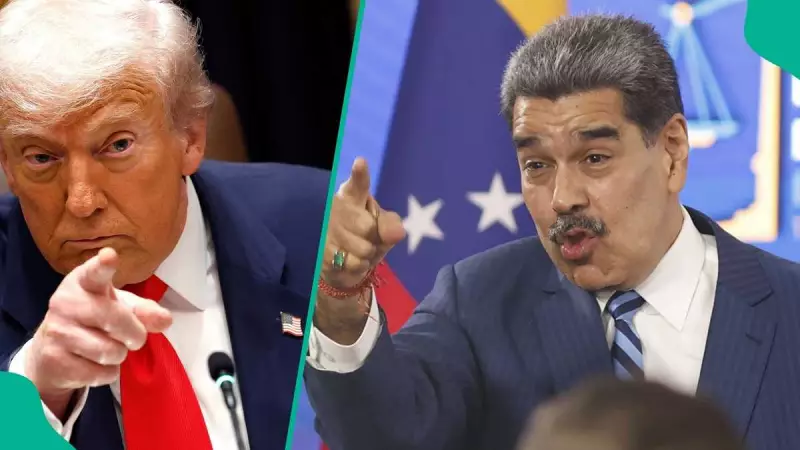
The geopolitical landscape of South America has been violently upended following a dramatic escalation by the United States, which has carried out military strikes inside Venezuela. The early morning attacks on Friday, 3rd January 2026, triggered powerful explosions across the capital city of Caracas, plunging the nation into a state of crisis.
Explosions and Panic Grip Caracas Residents
According to multiple eyewitness reports and footage circulating on social media, residents of Caracas were jolted from their sleep around 2 a.m. by the sound of massive explosions and aircraft noise. The night sky was lit up by flashes and filled with thick black smoke for over an hour, creating scenes of panic and confusion.
A Reuters witness confirmed that explosions could be heard across the city, with smoke rising from several locations. Online videos captured the raw fear of citizens, with one woman heard exclaiming, "My love, oh no, look at that," as blasts echoed in the distance. The Venezuelan government stated that the strikes also hit targets in the neighbouring states of Miranda, Aragua, and La Guaira.
Maduro's Swift Response: National Emergency and Mobilisation
In a swift and decisive response to the aggression, President Nicolás Maduro declared a national emergency and ordered the full mobilisation of Venezuela's defence forces. The government issued a statement accusing Washington of a brazen attempt to seize the country's vast oil and mineral resources.
"The United States seeks to take possession of our natural wealth, but it will not succeed," the statement declared. The tension was further compounded by a power outage reported in parts of southern Caracas, near a major military installation, heightening fears among the local population.
Months of Threats Culminate in Military Action
This direct military action follows months of increasingly hostile rhetoric from US President Donald Trump towards the Venezuelan government. President Trump has repeatedly questioned the legitimacy of Maduro's presidency, accusing him of rigging last year's election to remain in power.
The United States, alongside Venezuela's political opposition and several international partners, does not recognise Maduro's re-election. Trump had publicly urged the Venezuelan leader to step aside, suggesting earlier this week that it would be "smart" for Maduro to leave office. In a significant military buildup preceding the strikes, Washington had deployed an aircraft carrier, warships, and advanced fighter jets to the Caribbean region.
The Pentagon has remained conspicuously silent in the immediate aftermath, deflecting all questions about the operation to the White House, which has declined to comment. This attack marks a severe and dangerous shift in the long-standing tensions between the two nations, moving from sanctions and threats to confirmed military strikes on Venezuelan soil.




