
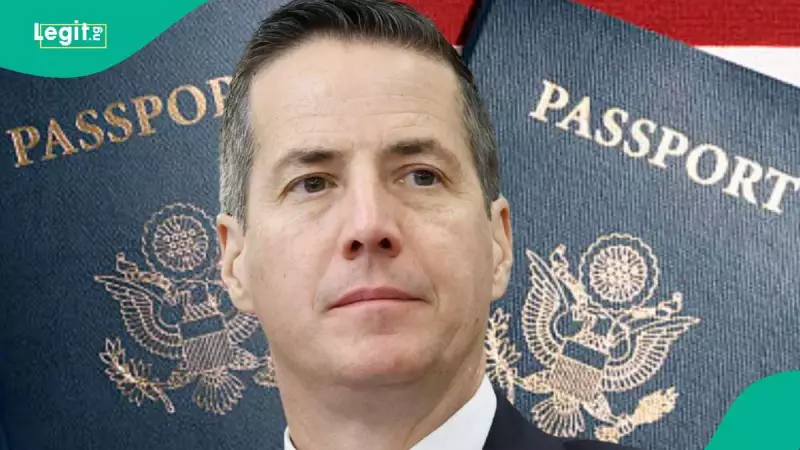
A new legislative proposal in the United States Senate has sparked significant concern among Nigerian diaspora communities and other immigrant groups. Senator Bernie Moreno, a Republican from Ohio, announced plans on Monday, December 3, 2025, to introduce a bill that would effectively end dual citizenship in the United States.
The Exclusive Citizenship Act of 2025: A Call for "Exclusive Allegiance"
Senator Moreno's proposed legislation, named the Exclusive Citizenship Act of 2025, would mandate that American citizens who hold citizenship in another country must choose between the two. The bill calls for "exclusive allegiance" to the United States. According to reports from Fox News Digital, the legislation would also mean that any U.S. citizen who voluntarily seeks foreign citizenship in the future would automatically forfeit their American status.
Moreno, who was born in Colombia and renounced his Colombian citizenship, framed the proposal around his personal experience. He described becoming a U.S. citizen at age 18 as one of the greatest honors of his life. "It was an honor to pledge an Oath of Allegiance to the United States of America and only to the United States of America," Moreno stated. He added, "Being an American citizen is an honor and a privilege — and if you want to be an American — it’s all or nothing. It’s time to end dual citizenship for good."
Potential Impact and Enforcement Mechanisms
If enacted, the bill would have profound implications for the millions of Americans, including an estimated hundreds of thousands of Nigerian-Americans, who hold dual citizenship. The legislation would require the U.S. State Department and the Department of Homeland Security (DHS) to establish databases and enforcement rules.
Americans with dual citizenship would be given a one-year grace period after the law's enactment to either formally renounce their foreign citizenship through the secretary of state or notify DHS of their intent to relinquish their U.S. citizenship. Failure to comply within that year would result in the automatic loss of U.S. citizenship. Those who lose their citizenship would be recorded in federal systems and treated as aliens under U.S. immigration law.
Legal Hurdles and Political Context
This initiative is part of a broader context of immigration policy discussions. The proposal aligns with efforts during President Donald Trump's administration to tighten citizenship laws, including a previous move to end birthright citizenship, which faced legal challenges. Moreno argues that dual citizenship creates "conflicts of interest and divided loyalties."
However, the bill is likely to face significant legal obstacles. The U.S. Supreme Court has addressed the issue of dual citizenship in rulings dating back to the 1950s, and legal experts suggest any attempt to overturn these established protections would be contested in court. This is not the first attempt to challenge dual-citizenship laws; in recent years, House Republicans have pushed measures requiring congressional candidates to disclose foreign citizenship or banning dual citizens from serving in Congress.
The current administration has not yet taken a formal position on Senator Moreno's specific proposal. For the large and vibrant Nigerian diaspora community in the United States, this bill represents a potential pivotal moment, forcing a difficult choice between their heritage and their adopted home.




