
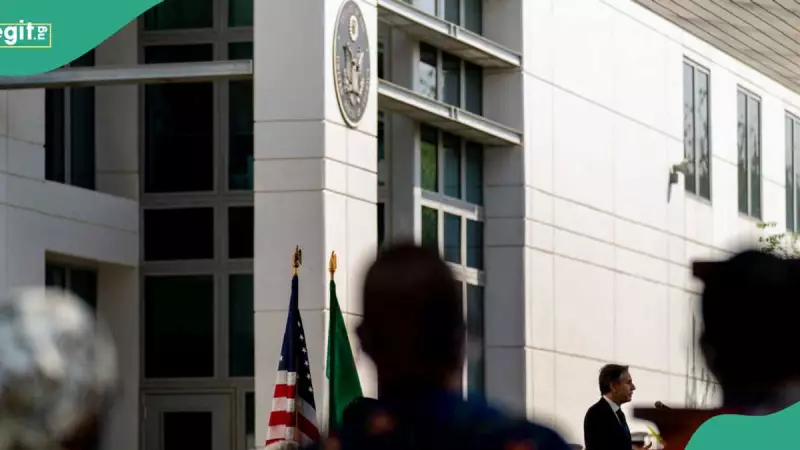
The United States Embassy in Abuja has issued a crucial clarification aimed at reassuring Nigerian travelers following the announcement of new partial travel restrictions. The embassy confirmed that all US visas issued to Nigerians before January 1, 2026, will remain fully valid and will not be revoked.
Reasons Behind Nigeria's Inclusion in Travel Restrictions
This clarification comes after the US government, led by President Donald Trump, expanded its travel ban list on December 16, adding Nigeria and 14 other nations, predominantly from Africa and the Caribbean. The affected countries include Angola, Benin, Côte d’Ivoire, Gabon, The Gambia, Antigua and Barbuda, and Dominica.
US authorities cited two primary reasons for Nigeria's inclusion. The first revolves around security concerns, specifically referencing the operational challenges posed by extremist groups like Boko Haram and the Islamic State in West Africa Province (ISWAP) within certain regions of Nigeria. These security conditions complicate the screening and vetting processes for visa applicants.
The second reason is based on visa compliance data. Officials pointed to specific overstay rates for Nigerian visa holders. According to the assessment, the overstay rate for B-1 (business) and B-2 (tourism) visitor visas was 5.56 percent. For F, M, and J visas, which are used by students and exchange visitors, the overstay rate was significantly higher at 11.90 percent.
Which Visa Categories Are Affected?
The presidential proclamation, set to take effect on January 1, 2026, impacts several key visa categories commonly used by Nigerians. The restrictions apply to both immigrant and non-immigrant visas, specifically targeting:
- B-1 (Business) visas
- B-2 (Tourism) visas
- B-1/B-2 combination visas
- F (Academic Student) visas
- M (Vocational Student) visas
- J (Exchange Visitor) visas
These categories cover travel for business, tourism, education, and cultural exchange programs, which are major reasons Nigerians seek entry into the United States.
Exemptions and Application Process Post-2026
In its statement, the US Embassy strongly emphasized that the new policy is not retroactive. It specifically applies only to foreign nationals who are outside the United States on the effective date and do not already possess a valid visa. "No visas issued before January 1, 2026, at 12:01 a.m. EST, have been or will be revoked pursuant to the Proclamation," the embassy's release stated.
The embassy also outlined several important exemptions to the restrictions. These include:
- Lawful Permanent Residents of the US (Green Card holders)
- Dual nationals traveling on a passport from a non-restricted country
- Holders of Special Immigrant Visas linked to US government service
- Participants in certain major international sporting events
- Certain immigrants facing persecution
Furthermore, the embassy noted that Nigerian applicants covered by the new restrictions may still submit visa applications and attend scheduled interviews after January 1, 2026. However, they should be aware that they could be deemed ineligible for visa issuance or entry under the new rules once the policy is active. The embassy's communication aims to manage expectations and reduce anxiety among prospective travelers and those with existing travel plans.
The move by the US government has sparked significant discussion and concern within Nigeria, a country with strong cultural, educational, and business ties to the United States. This clarification seeks to address immediate worries while delineating the scope of the forthcoming policy change.




