
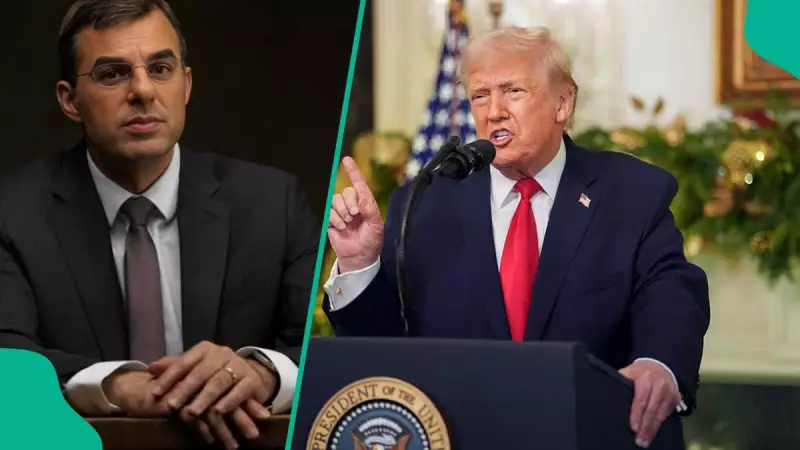
A significant constitutional debate has erupted in Washington D.C. following recent United States military action in Nigeria. The controversy stems from President Donald Trump's assertion that he possesses the unilateral authority to order such strikes without seeking approval from Congress.
Trump's Claim of Commander-in-Chief Powers
On the morning of Friday, December 26, 2025, President Trump announced via his Truth Social platform that U.S. forces had executed what he termed "powerful and deadly" strikes in Nigeria's northwestern Sokoto state. The president stated the operation targeted fighters affiliated with the Islamic State (ISIS), whom he accused of attacking civilians, with a particular mention of Christians.
In his post, Trump explicitly framed the action as being taken "at my direction as Commander in Chief." He issued a warning that further military measures would follow if violence by the militants continued, framing the strike as a demonstration of American resolve against radical Islamic terrorism.
Lawmakers Challenge the Legal Basis
The president's declaration immediately sparked a fierce backlash from several U.S. lawmakers, who argue it oversteps constitutional boundaries. Critics contend that the U.S. Constitution requires congressional authorization for offensive military actions abroad, a power not vested solely in the presidency.
Leading the charge is former Republican congressman, Justin Amash. In a public statement, Amash challenged the legal justification for the Nigeria strikes. He argued that existing authorizations, specifically the 2001 Authorisation for Use of Military Force (AUMF) passed after the September 11 attacks, does not apply to Nigeria. "Offensive military actions need congressional approval," Amash insisted.
Amash further dismissed the notion that the War Powers Resolution could provide a legal cover, emphasizing that the framers of the Constitution deliberately divided war powers to prevent executives from easily dragging the nation into conflict.
AFRICOM Confirms Nigerian Government's Request
Amid the political firestorm in Washington, the U.S. Africa Command (AFRICOM) provided crucial context. The military command confirmed that the aerial operations were conducted at the formal request of Nigerian authorities. The stated objective was to degrade the capabilities of the Islamic State West Africa Province (ISWAP), a major terrorist threat in the region.
AFRICOM framed the strikes as part of an ongoing security cooperation with Nigeria, aimed at countering terrorism and enhancing stability in areas plagued by violent extremist groups. This detail adds a layer of bilateral agreement to the unilateral authority claimed by President Trump.
Broader Implications and Expected Scrutiny
The disagreement among American legislators is not an isolated incident but is expected to intensify broader scrutiny of U.S. counter-terrorism missions worldwide. Core questions are being revived about the limits of presidential war powers and the essential role Congress must play in sanctioning the use of military force.
While some lawmakers have defended the president's action as a necessary and swift response to global terrorist threats, the episode has undoubtedly reignited a fundamental debate in Washington. It also focuses international attention on the complex legal and political ramifications of U.S. military engagements on foreign soil, particularly in sovereign nations like Nigeria.
The aftermath of the Sokoto strikes ensures that discussions on executive authority, congressional oversight, and international security partnerships will remain at the forefront of U.S. political discourse for the foreseeable future.




