
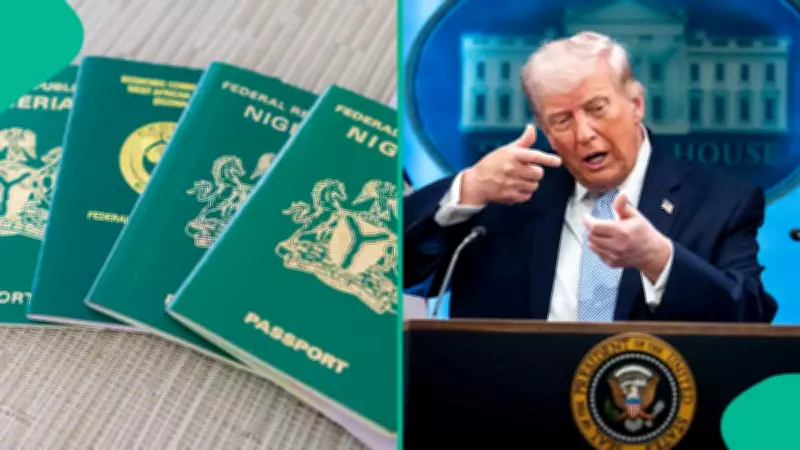
US Department of Homeland Security Updates Nigerian Deportation List, Reducing Numbers from 130 to 110
The United States Department of Homeland Security (DHS) has announced a significant update to its deportation list targeting Nigerians, reducing the number of individuals from 130 to 110. These remaining individuals have been placed on what the DHS describes as its "worst-of-the-worst" criminal register, indicating convictions for serious crimes that warrant removal from the country.
Immigration Enforcement Measures and Lack of Disclosure
According to official statements, the deportations are part of ongoing immigration enforcement measures aimed at maintaining public safety and upholding U.S. laws. While the DHS has made the names and photos of the affected Nigerians publicly available, it has notably not disclosed the timeline for the deportations or the specific offences committed by each individual. This lack of transparency leaves many questions unanswered as the process unfolds.
Names of Nigerians on the Updated Deportation Register
The revised list includes a wide array of individuals, such as:
- Boluwaji Akingunsoye
- Ejike Asiegbunam
- Emmanuel Mayegun Adeola
- Bamidele Bolatiwa
- Ifeanyi Nwaozomudoh
- Aderemi Akefe
- Solomon Wilfred
- Chibundu Anuebunwa
- Joshua Ineh
- Usman Momoh
- Oluwole Odunowo
- Bolarinwa Salau
- Oriyomi Aloba
- Oludayo Adeagbo
- Olaniyi Akintuyi
- Talatu Dada
- Olatunde Oladinni
- Jelili Qudus
- Abayomi Daramola
- Toluwani Adebakin
- Olamide Jolayemi
- Isaiah Okere
- Benji Macaulay
- Joseph Ogbara
- Olusegun Martins
- Kingsley Ariegwe
- Olugbenga Abass
- Oyewole Balogun
- Adeyinka Ademokunla
- Christian Ogunghide
- Christopher Ojuma
- Olamide Adedipe
- Patrick Onogwu
- Olajide Olateru-Olagbegi
- Omotayo Akinto
- Kenneth Unanka
- Jeremiah Ehis
- Oluwafemi Orimolade
- Ayibatonye Bienzigha
- Uche Diuno
- Akinwale Adaramaja
- Boluwatife Afolabi
- Chinonso Ochie
- Olayinka A. Jones
- Theophilus Anwana
- Aishatu Umaru
- Henry Idiagbonya
- Okechukwu Okoronkwo
- Daro Kosin
- Sakiru Ambali
- Kamaludeen Giwa
- Cyril Odogwu
- Ifeanyi Echigeme
- Kingsley Ibhadore
- Suraj Tairu
- Peter Equere
- Dasola Abdulraheem
- Adewale Aladekoba
- Akeem Adeleke
- Bernard Ogie Oretekor
- Abiemwense Obanor
- Olufemi Olufisayo Olutiola
- Chukwuemeka Okorie
- Abimbola Esan
- Elizabeth Miller
- Chima Orji
- Adetunji Olofinlade
- Abdul Akinsanya
- Elizabeth Adeshewo
- Dennis Ofuoma
- Quazeem Adeyinka
- Ifeanyi Okoro
- Oluwaseun Kassim
- Olumide Bankole Morakinyo
- Abraham Ola Osoko
- Oluchi Jennifer
- Chibuzo Nwaonu
Context of Nigeria–US Relations Under Trump's Second Term
This development occurs against a backdrop of strained Nigeria–US relations during Donald Trump's second term, which has been marked by tension, particularly around immigration and visa restrictions. While there were initial hopes for stronger trade ties, the implementation of strict policies has revived concerns among Nigerians seeking to study, work, or migrate to the United States. The relationship continues to be defined by a mix of opportunity and strain, with this deportation list highlighting the enforcement side of U.S. immigration policy.
US Embassy Warning on Visa Overstays
In a related move, the United States embassy in Nigeria issued a warning on February 9, emphasizing that visa overstays by Nigerian travellers could have broader consequences for others seeking entry into the country. The embassy explained that overstaying visas could reduce opportunities for Nigerians who wish to travel for education, business, or family visits, stressing that compliance with visa rules is essential to maintain access for responsible travellers.
Officials also encouraged Nigerians to report suspected visa fraud, providing two official email addresses for submissions: AbujaFPU@state.gov and LagosFPU@state.gov. This advisory underscores the ongoing efforts to ensure adherence to immigration regulations and prevent abuses that could impact the wider Nigerian community.
The DHS decision to update and reduce the deportation list reflects its continued focus on immigration enforcement and the removal of individuals convicted of serious crimes. As the process moves forward without a disclosed timeline, further updates are anticipated, keeping this issue at the forefront of bilateral discussions between Nigeria and the United States.




