
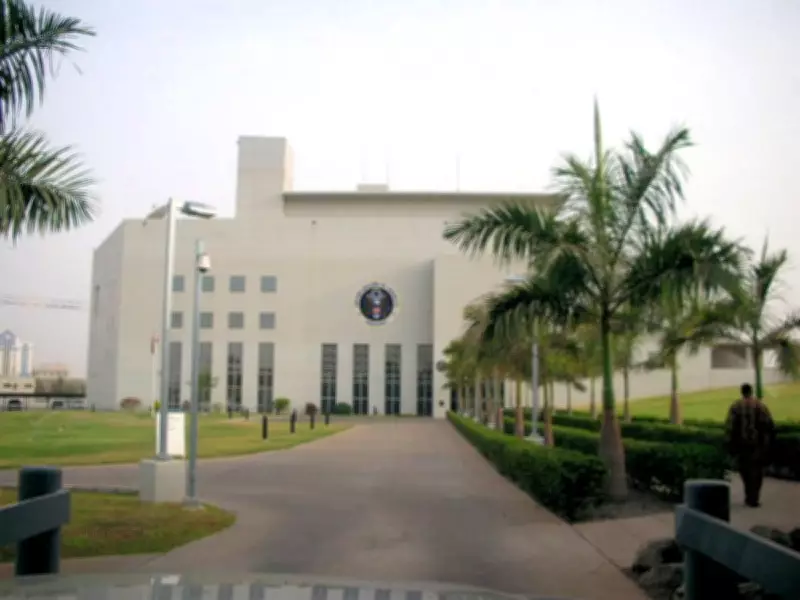
US Orders Embassy Staff Evacuation Over Nigeria's Deteriorating Security
The United States Department of State has taken a significant step by authorizing the departure of non-emergency US government employees and their family members from the US Embassy in Abuja. This decision, announced on Wednesday, April 8, 2026, is directly linked to a worsening security situation across Nigeria, prompting heightened concerns for American citizens in the region.
Travel Advisory Upgraded to 'Level 3: Reconsider Travel'
In a comprehensive travel advisory issued concurrently, the department has elevated the overall travel advisory for Nigeria to 'Level 3: Reconsider Travel.' This classification advises Americans to think twice before visiting due to pervasive risks including crime, terrorism, kidnapping, and civil unrest. The advisory explicitly highlights that some areas within the country carry an even higher risk, warranting stricter warnings.
23 Nigerian States Now Designated 'Level 4: Do Not Travel'
The department has expanded its list of high-risk areas, adding Plateau, Jigawa, Kwara, Niger, and Taraba states to the 'Level 4: Do Not Travel' category. This brings the total number of states under this severe advisory to 23, where travel is strongly discouraged for US citizens. The advisory states, 'On April 8, 2026, the Department of State authorized non-emergency U.S. government employees and U.S. government employee family members to leave U.S. Embassy Abuja due to the deteriorating security situation.'
Detailed Breakdown of High-Risk States
The Level 4 states, where US citizens are urged to avoid travel, are categorized by region due to specific threats:
- Northern Nigeria: Borno, Jigawa, Kogi, Kwara, Niger, Plateau, Taraba, Yobe, and northern Adamawa states are flagged primarily for terrorism, crime, and kidnapping. The advisory notes that the security situation in these areas is 'unstable and uncertain due to civil unrest,' with widespread violence between communities and armed crime, including kidnapping and roadside banditry.
- Additional Northern States: Bauchi, Gombe, Kaduna, Kano, Katsina, Sokoto, and Zamfara are also listed, citing unrest, crime, and kidnapping as key concerns.
- Southern and Southeastern Nigeria: The department advises avoiding Abia, Anambra, Bayelsa, Delta, Enugu, Imo, and Rivers states (excluding Port Harcourt) due to crime, kidnapping, and unrest. It adds, 'Crime is widespread in Southern Nigeria. There is a high risk of kidnapping, violent protests, and armed gangs.'
Pervasive Security and Health Concerns
The advisory underscores that violent crimes such as armed robbery, carjacking, and kidnapping for ransom are widespread across Nigeria. US citizens are perceived as wealthy and are frequent targets, increasing their vulnerability. Terrorist attacks remain a persistent threat nationwide, potentially occurring at markets, shopping centers, hotels, places of worship, and public gatherings without warning.
Furthermore, the State Department highlights significant limitations in healthcare services, describing them as inconsistent and generally not meeting US or European standards. This adds another layer of risk for travelers in need of medical attention.
Recommendations for US Citizens
Despite the warnings, the State Department offers guidance for those considering travel to Nigeria. It urges US citizens to:
- Enroll in the Smart Traveler Enrollment Program for important security updates.
- Exercise extreme caution while traveling.
- Avoid demonstrations and large gatherings.
- Establish personal safety and 'proof of life' protocols to enhance security.
This advisory reflects growing international concern over Nigeria's security landscape, emphasizing the need for vigilance and precautionary measures for foreign nationals in the country.




