
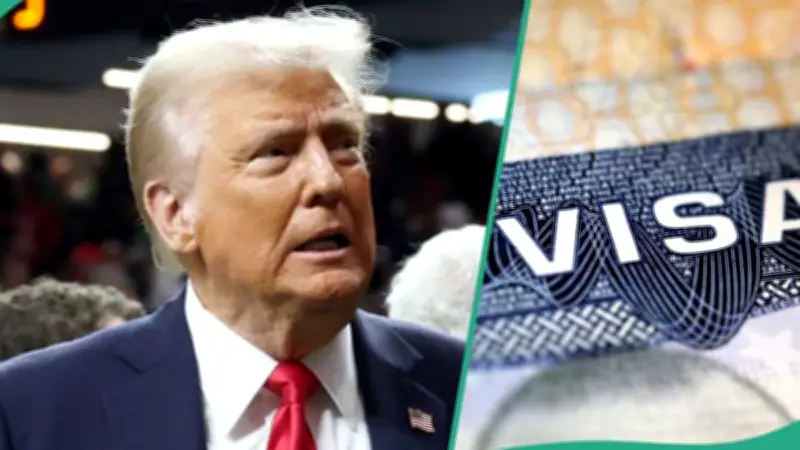
The U.S. Department of State has clarified that a visa application can be refused even after an interview, stressing that every case is weighed individually under American immigration statutes. Consular officers examine each applicant's submitted information, supporting evidence, and overall eligibility before deciding on issuance or refusal. While many requests succeed, others fail when applicants do not satisfy procedural or legal requirements.
According to the department, applicants are encouraged to provide complete and truthful details, as refusals often stem from incomplete paperwork, failing to meet category-specific criteria, or having a criminal history. The department also said that every application is assessed on its own merits, and no two cases are treated identically.
Seven Common Grounds for U.S. Visa Refusals
The State Department has outlined seven recurring reasons that lead to visa denials. These grounds cover both documentation issues and personal background factors, and they apply to immigrant and nonimmigrant visa categories alike. Below is a breakdown of each reason.
1. Insufficient Information or Supporting Documents
A visa petition may be rejected if the consular officer lacks enough material to confirm that the applicant qualifies for the requested visa. All required documents must be submitted, and the details provided must be consistent with the chosen visa type. Missing or contradictory information can derail an otherwise valid application. The department advises applicants to carefully review the evidence they submit and ensure it aligns with the visa category they are pursuing.
2. Failure to Qualify for the Selected Visa Category
Each U.S. visa class has its own distinct eligibility conditions. Whether an individual is applying for a tourist visa, student visa, work visa, or another category, they must prove they meet the exact prerequisites. If the applicant does not meet the requirements attached to that specific visa, the application can be denied. For instance, a work visa demands employer sponsorship and professional qualifications, while a student visa requires enrolment at an approved educational institution.
3. Inability to Prove Eligibility
Applicants must convince the reviewing officer that they are eligible under U.S. immigration law. If they cannot produce adequate evidence to demonstrate the purpose of their trip or establish their qualification for the visa sought, refusal becomes a possible outcome. This often involves showing strong ties to one's home country, sufficient financial means, and a clear intent to comply with visa conditions.
Background and Criminal History Factors
Beyond paperwork and eligibility, the U.S. government also examines an applicant's personal background when evaluating a visa request. Certain histories can trigger ineligibility under immigration regulations.
4. Previous Criminal Activities
Some criminal convictions or ongoing legal issues can make an applicant ineligible for a U.S. visa. The Department of State reviews criminal history and other pertinent background information as part of its visa assessment. Certain convictions may lead to a finding of ineligibility, as stipulated under U.S. immigration law.
5. Drug-Related Offences
Applicants connected to illegal drug activities may also be barred from obtaining a visa. A record involving certain drug-related offences is considered a ground for refusal under U.S. immigration law. The department evaluates any such history during the visa review process.
6. Falling Under Immigration Ineligibility Rules
U.S. immigration law identifies several conditions that prevent a person from receiving a visa. These include various legal, immigration, and security-related issues that can surface when the application is reviewed. Consular officers consider these rules when determining whether to approve or deny a request.
What Options Remain After a Visa Denial?
A denial is not necessarily the end of the road. In some cases, applicants may be told they can apply for a waiver.
7. Failure to Qualify for a Waiver
When an applicant is found ineligible, the consular officer may note that a waiver is available. However, applying for or receiving a waiver does not guarantee visa approval. It simply gives eligible individuals a chance to request permission despite their ineligibility. The waiver process is separate and requires additional evidence to support the request.
The Department of State advises all refused applicants to carefully read the reason provided by the consular officer and decide whether any further step is possible, such as seeking a waiver where applicable. The department also emphasizes that complete, truthful, and accurate information must be provided throughout the process, since every application is assessed on its own merits.
Visa Holders Must Verify Their Authorized Stay
In a related development, the United States Mission in Nigeria previously reminded travelers that possessing a valid U.S. visa does not automatically define how long they may remain in the country. The embassy urged international visitors to check their electronic arrival record after entering the United States to confirm their authorized period of stay.
This guidance serves as an important reminder for all visa applicants, not just Nigerians. Understanding why visas are denied can help prospective travelers avoid mistakes and improve their chances of approval. The State Department's list of seven reasons provides a clear outline of the most common pitfalls, and applicants who take these points seriously are better prepared for the visa interview.




