
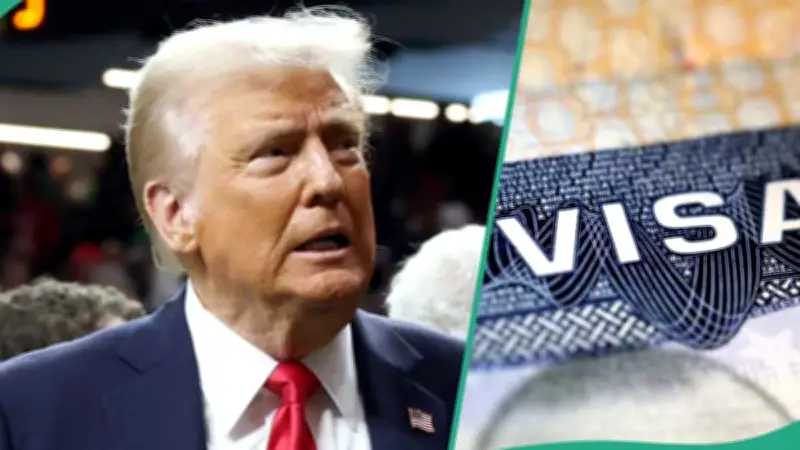
The United States has issued revised visa rules, explicitly warning Nigerians and other foreign applicants that meeting the basic application requirements is not a guarantee of approval. The U.S. Department of State's updated guidance lists seven key reasons why visa applications may be denied. The guidance, which has been reported by Vanguard and Punch, reaffirms that every visa application is reviewed individually under U.S. immigration law. The Trump administration's State Department has made it clear that consular officers have the final say on whether an applicant receives a visa.
According to the Department of State, most visa applicants are required to attend an interview at a U.S. Embassy or Consulate. It is during this interview that a consular officer evaluates whether the applicant meets the requirements of the specific visa category. Even if an applicant has submitted all required forms and fees, the officer may still refuse the visa if legal or documentary conditions are not satisfied. The United States approves many visas each year, but a significant number of applicants are also turned away for failing to meet the strict criteria.
Why Do Visa Applications Fail?
The State Department has outlined the following seven reasons as the most common grounds for visa refusal. These reasons are applicable to both immigrant and non-immigrant visa categories, and they underscore the strict nature of U.S. immigration enforcement.
- Incomplete Information or Missing Documents: Applicants must provide accurate information and all required supporting documents. If paperwork is missing, inconsistent, or insufficient, the consular officer cannot properly determine eligibility. This often leads to a refusal.
- Failure to Meet Visa Category Requirements: Every visa type — whether for tourism, study, work, or business — has specific eligibility conditions. Applicants who do not meet the criteria for the category they applied for will have their applications denied.
- Inability to Prove Eligibility: Applicants bear the burden of convincing the officer that they qualify. They must clearly demonstrate the purpose of their trip and provide enough evidence to support their application. Failure to establish eligibility results in denial.
- Criminal Record: A history of certain criminal offenses, either past or current, can render an applicant ineligible for a visa. Criminal history is a key factor considered during the background review.
- Drug-Related Offenses: Involvement in illegal drug activities is recognized as a ground of inadmissibility under U.S. immigration law. Individuals linked to such activities may be denied a visa outright.
- Other Grounds of Inadmissibility: Applicants may also be refused for other legal, security, or immigration-related reasons that emerge during the vetting process. These grounds are identified on a case-by-case basis.
- Failure to Qualify for a Waiver: Some ineligible applicants may apply for a waiver, but the approval of a waiver is not automatic. Even if a waiver is granted, it does not guarantee that a visa will be issued.
These seven reasons demonstrate that the U.S. visa process is not merely a paperwork exercise. Even with a completed application, consular officers weigh multiple factors before granting a visa. The Department of State emphasizes that discretion rests with the officer, and visa issuance is never guaranteed.
What to Do After a Visa Refusal
The Department of State advises applicants whose visas are denied to carefully review the explanation provided by the consular officer. Understanding the specific ground for refusal is the first step to deciding whether to reapply, request a waiver, or pursue any other available remedy. In some cases, correcting a mistake or submitting additional documents can make a difference.
For any future applications, the agency stresses the importance of providing complete, truthful, and accurate information. Each application is judged on its own merits according to U.S. immigration law. A previous refusal does not permanently bar an applicant, but the new application must address the earlier denial's basis.
Marriage and Green Card Eligibility
In a related clarification, the U.S. Citizenship and Immigration Services (USCIS) has stated that marrying an American citizen does not automatically guarantee eligibility for a green card or visa. Under U.S. immigration law, USCIS evaluates whether the marriage is legally valid before approving any immigration petition. A valid marriage certificate is often the starting point, but it is not sufficient on its own.
The agency says some marriages will not be recognized for immigration purposes even if they are considered lawful in the country or jurisdiction where they took place. This means applicants in such unions may see their green card or spouse visa applications denied. Reports have identified at least five types of marriages that fall outside the eligibility criteria for U.S. immigration benefits.




