
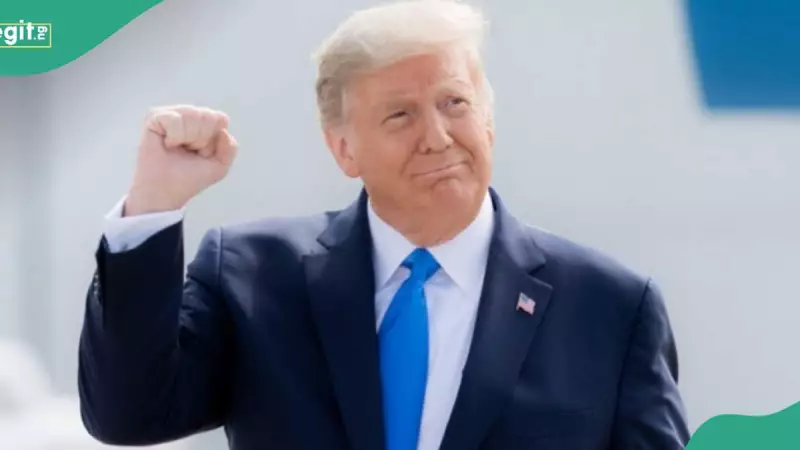
The White House has officially stated that using American military force remains a viable option as President Donald Trump actively pursues plans to bring Greenland under United States control. This confirmation has sent shockwaves through international diplomatic circles, particularly among European allies.
Military Option Firmly on the Table
In a statement that has escalated global tensions, the Trump administration defended the president's broad authority. The administration explicitly stated that utilizing the U.S. military is always an option available to the commander-in-chief in the pursuit of what it calls a vital national security priority. Officials reiterated President Trump's view that acquiring the vast Arctic island is crucial for deterring adversaries in the strategically important region.
The statement followed President Trump's repeated public remarks about Greenland's strategic value, despite Denmark being a longstanding NATO ally. This position has placed the transatlantic alliance under unprecedented strain, with key European leaders issuing stark warnings.
European Powers Unite in Opposition
The reaction from Europe has been swift and firm. Danish Prime Minister Mette Frederiksen led the charge, warning that any military move against Greenland would directly threaten the future of the NATO alliance. She was joined by British Prime Minister Sir Keir Starmer and French President Emmanuel Macron, who issued a joint declaration pledging to defend Greenland's territorial integrity.
Diplomatic channels are now buzzing with activity. The foreign ministers of both Denmark and Greenland have formally requested urgent talks with U.S. Secretary of State Marco Rubio. Britain has publicly aligned itself with Denmark's stance, with Sir Keir Starmer expressing full support for Prime Minister Frederiksen's position on the island's future sovereignty.
Despite this mounting pressure, a senior U.S. official told Reuters that opposition from allied governments would not deter Washington's objective. The official emphasized, "It's not going away," signalling the administration's determination. This resolve is viewed by analysts as being reinforced by the recent U.S. operation in Venezuela that led to the arrest of President Nicolas Maduro, demonstrating a willingness to act decisively abroad.
Diplomatic and Financial Avenues Still Explored
While the military option is being emphasized, U.S. officials have outlined alternative paths being considered. One primary option involves attempting to purchase Greenland through direct negotiations with Denmark. A senior official noted that diplomacy and deal-making are always President Trump's first instinct, suggesting a purchase agreement would be the preferred route if terms could be reached.
Another scenario under serious consideration is the creation of a Compact of Free Association. This is a framework the U.S. already uses with several Pacific island nations, typically granting Washington military access in exchange for substantial financial support and other benefits. Officials indicated that President Trump is keen to secure Greenland during his current term in office.
The geopolitical stakes are high in the Arctic, where NATO allies, including the United States, continue joint military exercises. The U.S. already maintains Thule Air Base in Greenland, keeping the region firmly in the global security spotlight. President Trump has previously invoked the Monroe Doctrine to justify assertive foreign policy in the Western Hemisphere and has consistently framed the acquisition of Greenland as a necessity for U.S. national security.
As this high-stakes geopolitical drama unfolds, the world watches to see whether diplomacy or force will define the future of the world's largest island, with the cohesion of the NATO alliance hanging in the balance.




