
US Republican Lawmakers Introduce Bill Targeting Fulani Militias for Terrorist Designation
In a significant legislative move, Republican members of the United States House of Representatives have proposed new legislation that seeks to formally designate Fulani ethnic militias as Foreign Terrorist Organizations (FTO). The bill, titled the Nigeria Religious Freedom and Accountability Act of 2026, specifically addresses what sponsors describe as escalating religious violence in Nigeria.
Legislative Details and Key Sponsors
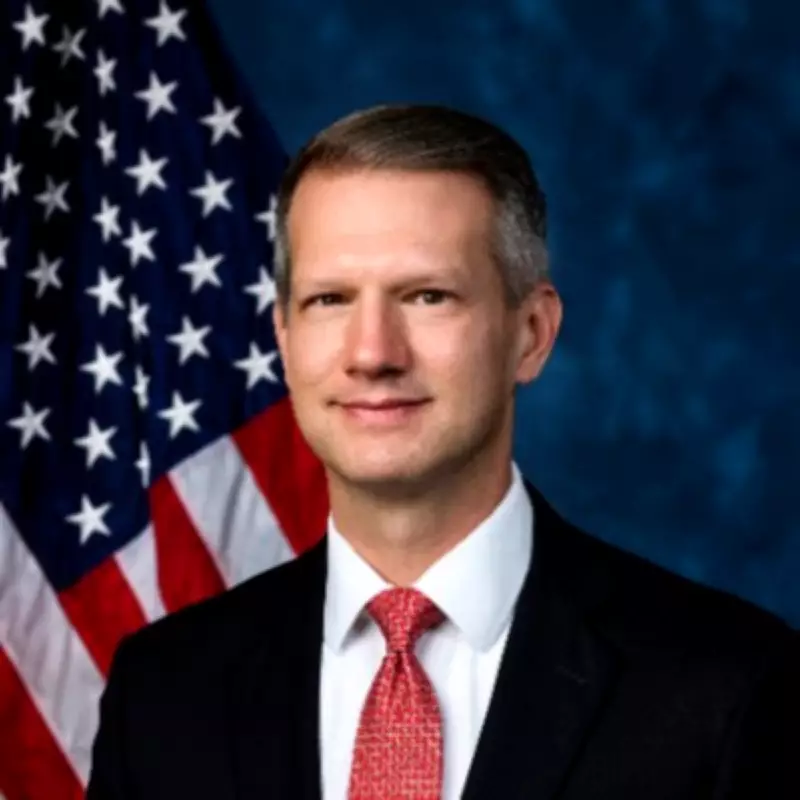
The proposed legislation was introduced by Representative Riley Moore of West Virginia and co-sponsored by Representative Chris Smith, alongside several other Republican lawmakers. Designated as HR 7457, the bill mandates the US Secretary of State to evaluate whether Fulani militias should receive the FTO designation and requires annual reports to Congress on efforts to combat religious persecution in Nigeria.
The bill also calls for a comprehensive review of American assistance to Nigeria, ensuring that US support does not inadvertently contribute to religious persecution or systemic violence. This provision reflects growing concerns about the effectiveness and oversight of foreign aid in conflict zones.
Political Context and Statements from Lawmakers
Representative Moore announced the legislation in a social media post, emphasizing that the United States is a Christian nation and must stand with persecuted Christians globally. He stated that the bill builds upon previous actions, including the designation of Nigeria as a Country of Particular Concern under the Trump administration and the recent US-Nigeria security framework agreement.
Moore referenced his visit to Nigeria as part of an investigation initiated by former President Donald Trump, where he witnessed firsthand the security challenges and violence faced by Christian communities. He estimated that between 50,000 and 125,000 Christians were killed between 2009 and 2025, citing incidents such as church destruction, kidnappings, sexual violence, and village attacks.
Representative Smith, Chairman of the House Foreign Affairs Africa Subcommittee, criticized the Nigerian government for what he called a blatant denial of religious persecution, arguing that this has allowed violence to fester. He emphasized that the United States has a responsibility to pressure Nigeria to act against systemic violence.
Additional Provisions and Broader Implications
The legislation also addresses other security concerns, including a call to counter what it describes as hostile foreign exploitation from illegal Chinese mining operations in Nigeria. This highlights the multifaceted nature of the bill, linking religious violence with broader geopolitical and economic issues.
Other co-sponsors include Representative Tom Cole of Oklahoma, who chairs the House Appropriations Committee, and Representatives Brian Mast, Mario Diaz-Balart, and Bill Huizenga. Cole noted that defending religious liberty globally aligns with US interests and responsibilities, reinforcing that religious persecution will not be tolerated.
Historical Background and Recent Developments
This legislative effort follows previous actions by the Trump administration, which designated Nigeria as a Country of Particular Concern in November 2025. That designation allows the US executive branch to apply diplomatic and economic measures. Additionally, Trump authorized coordinated strikes with the Nigerian government against suspected militants on Christmas Day 2025.
The introduction of this bill occurs amidst ongoing discussions about US-Nigeria relations and security cooperation. It underscores the increasing attention from US lawmakers on internal conflicts in Nigeria and their implications for international religious freedom and regional stability.




